
Keep the dirt on the lot
Silt Fence & Inlet Protection in Phoenix, AZ
Silt fence, inlet filters and fiber rolls installed to your stormwater plan and kept up through the monsoon.
- We look at your lot at no charge and quote it in writing
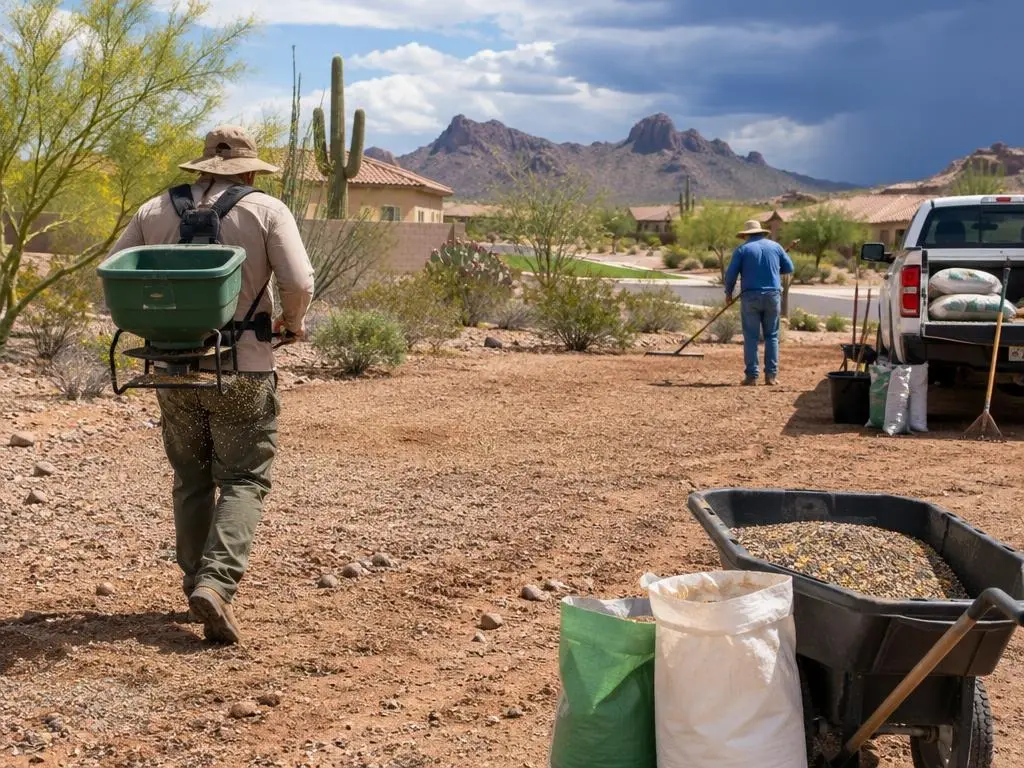
- Seed picked for the season: bermuda in summer, ryegrass in fall, natives for desert ground
- A written watering plan with every new seeding
Sediment Control for Dry Ground and Sudden Storms
Silt fence and inlet protection are the sediment control measures most Phoenix construction sites lean on between grading and final stabilization. Silt fence is a trenched-in geotextile fence that slows sheet flow and lets soil settle out on the uphill side. Inlet protection keeps that soil out of catch basins and storm drains. As silt fence contractors, we install both, along with fiber rolls and perimeter controls, for builders, site contractors, pool and remodel contractors and property owners whose sites fall under a stormwater plan.
Why it matters here even with little rain
It is easy to underrate sediment control in a city that averages 7.22 inches of rain a year. The problem is how it arrives. The National Weather Service counts June 15 to September 30 as Phoenix's monsoon season, and storms in that window bring heavy localized rain and flash floods. Graded ground that has been baking for months does not soak much of that up; it sheds it, and the runoff carries fine soil straight to the curb. Winter Pacific storms add a second, gentler wet season from December through March.
When it is required
Arizona's construction general permit applies to operators of construction activity that disturbs at least an acre, and to smaller work that is one piece of a bigger planned development or sale. Construction activity there means earth disturbance such as clearing, grading, excavating and stockpiling fill. Covered sites need a stormwater pollution prevention plan that identifies pollutant sources and the control measures used, and the plan must be kept on site while work is active. If there are multiple operators, such as a developer and a contractor, each needs coverage. In Phoenix, the city's grading code notes that the NPDES/AZPDES program can add construction stormwater requirements on top of the grading permit. Our job is to put the controls where the SWPPP shows them and keep them working.
Silt fence installation done right
Most silt fence that fails was installed wrong. The fabric has to be keyed into a trench and backfilled and compacted, not just laid on the surface, or water runs under it. It goes on the contour, not straight down a slope, with ends turned uphill so flow cannot skirt around. Posts go on the downhill side. Silt fence is for sheet flow; it is not meant to sit across a concentrated channel, where a check dam or rock is the right tool. Where the ground is too hard or rocky to trench properly, we use stabilized silt fence or fiber rolls instead.
Inlet protection
Curb inlets and area drains near a site are the last stop before the storm sewer. What we set depends on the kind of inlet and whether cars drive over it: silt fence barriers around area drains, sandbags or a gravel-filled mesh at curb openings, or filter devices under the grate. They need cleaning after storms, because a clogged filter floods the street.
Maintenance through the monsoon
Controls are only useful if they are still standing. After significant storms we check for undercutting, sagging fabric, sediment piled more than a third of the way up the fence, and knocked-over inlet devices, and we repair or replace them. Sediment that builds up behind the fence gets removed and spread on site or hauled. When the site is finally stabilized with seed, rock or landscaping, controls come out and the trench lines are smoothed.
The rainfall erosivity waiver
Arizona allows a narrow exception for some small sites. A project disturbing between one and five acres may get a waiver from the construction general permit if the rainfall erosivity factor stays below five for the whole construction period, the project is not part of a larger plan disturbing more than five acres, and it is not within a quarter mile of an impaired or outstanding state water. The factor is calculated through ADEQ's online system and the waiver has to be certified. In a dry valley, a short project scheduled outside the wet months sometimes qualifies; one running through the monsoon usually does not. Your engineer or permit preparer makes that call. If you do not have a waiver, plan on controls.
Stockpiles and entrances
Sediment does not only leave through low edges. Soil stockpiles sitting next to a curb, and the tracking that comes off tires at the site entrance, are two of the most common sources of dirt in the street after a storm. We ring stockpiles with fiber rolls or silt fence, cover the ones that will sit, and can help set up a stabilized entrance where the SWPPP shows one.
Who we work with
- Home builders and custom home contractors
- Site work and utility contractors
- Commercial general contractors
- Pool, remodel and addition contractors on tight lots
- HOAs and property managers with active projects
Sediment Control Services
Perimeter and inlet controls installed to the plan.
Silt fence installation
Trenched-in geotextile fence on the contour, ends turned up.
Stabilized silt fence
Reinforced fence for hard ground and heavier flows.
Inlet protection
Silt fence, sandbag, gravel-and-mesh and under-grate devices.
Fiber rolls
Wattles on slopes and perimeters where fence will not trench.
Maintenance visits
Post-storm inspection, repairs and sediment removal.
Removal at closeout
Controls pulled and lines smoothed after final stabilization.
Typical Silt Fence & Inlet Costs
| Item | Typical price |
|---|---|
| Silt fence without stabilization, per 100 lineal ft (a transportation agency 2025 rate list) | $378 |
| Silt fence, stabilized type, per 100 lineal ft (same list) | $748 |
| Silt-fence ring around a drain inlet, per inlet (same list) | $102 |
| Sandbag barrier at a drain inlet, per inlet (same list) | $141 |
| Gravel-and-mesh inlet barrier, per inlet (same list) | $172 |
| Gate-style filter set below an inlet grate, per inlet (same list) | $169 |
Rate-schedule figures from a state transportation agency, not Phoenix bids. Footage, ground conditions, access and how often the controls need service all move the cost. National numbers for context; we put a firm number in writing after the visit.
How We Install
1. Read the SWPPP
We mark control locations from your plan and walk the flow paths.
2. Trench and set
Fence trenched, keyed, backfilled and compacted on the contour.
3. Protect inlets
Devices matched to each inlet type and traffic.
4. Inspect after storms
Repairs and sediment removal as needed.
5. Remove at closeout
Controls pulled once the site is stabilized.
Why Choose Us for Silt Fence & Inlet Protection
Trenched, not laid
Fence is keyed in and compacted so water cannot run under it.
Seed and fence together
We can stabilize the ground and pull the controls on the same schedule.
Post-storm upkeep
Maintenance visits priced up front, not as surprises.
Silt Fence & Inlet Protection Questions
Does my project need silt fence?
If the job disturbs at least an acre, or belongs to a bigger planned development, Arizona's construction general permit and your SWPPP will call for sediment controls. Smaller jobs may still need them if runoff heads to a street or neighbor.
How much does silt fence installation cost?
A transportation agency 2025 rate list for erosion work puts silt fence at $378 per 100 feet for the unstabilized kind and $748 for stabilized. Phoenix pricing depends on footage, ground and access; we quote per site.
Can silt fence go across a drainage channel?
No. Silt fence is for sheet flow. Concentrated flow needs check dams, rock or a different control.
How often should silt fence be checked?
After every significant storm and on the schedule your SWPPP sets. Sediment should be removed before it builds up about a third of the fence height.
What happens when the job is done?
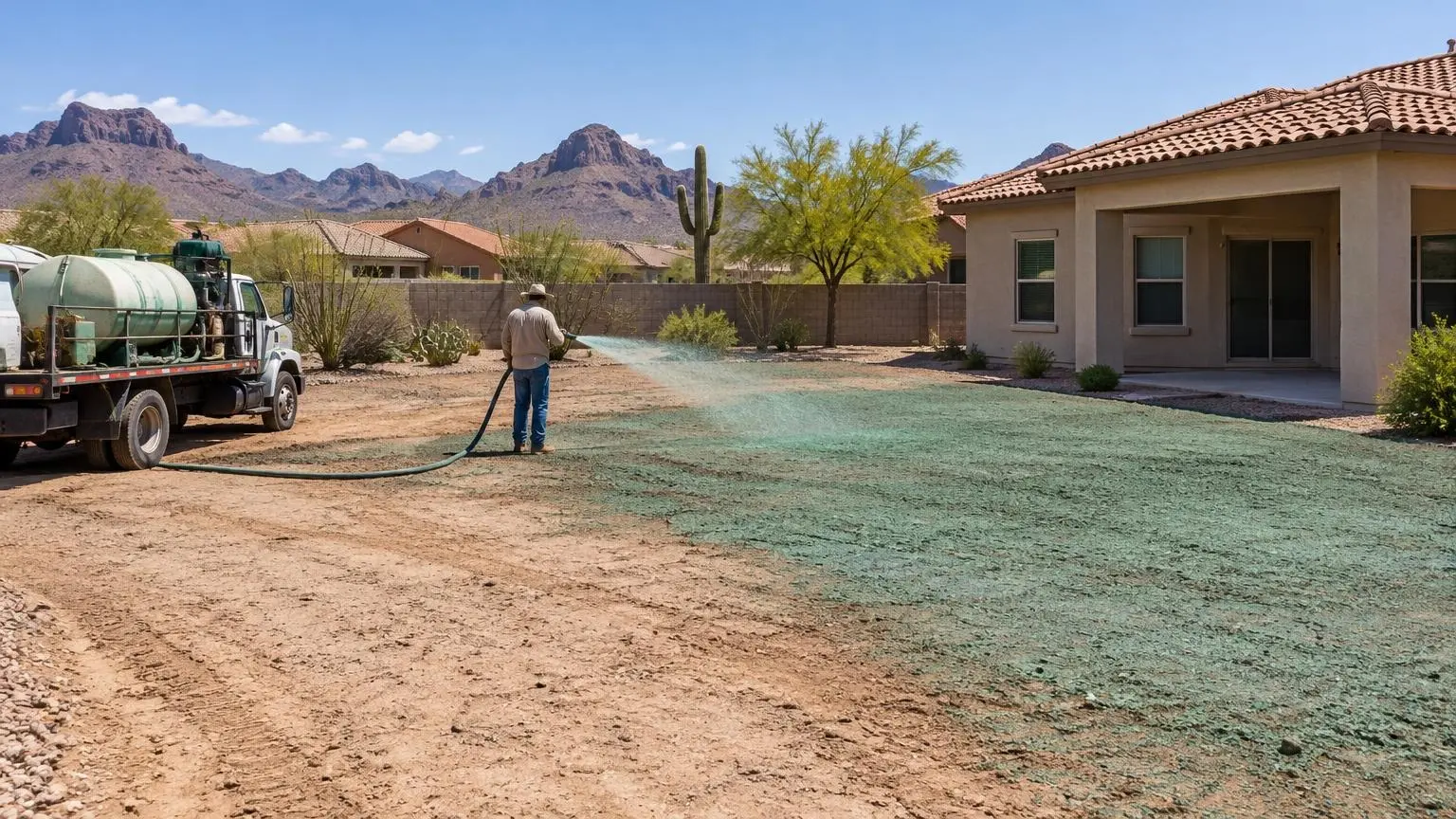
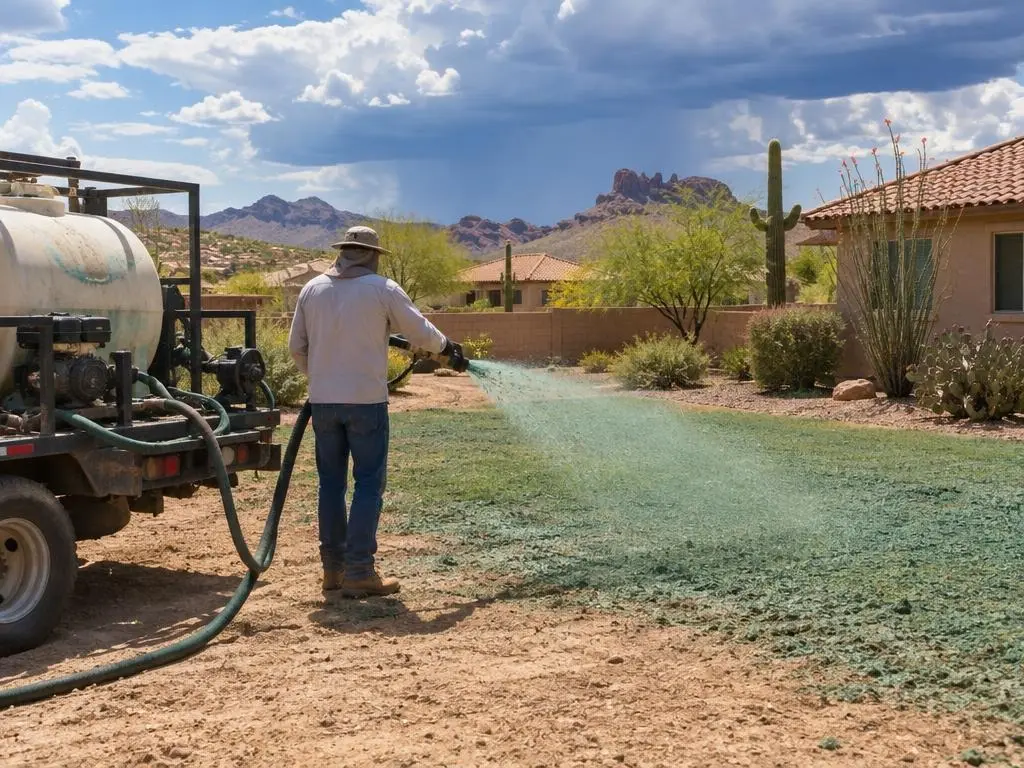
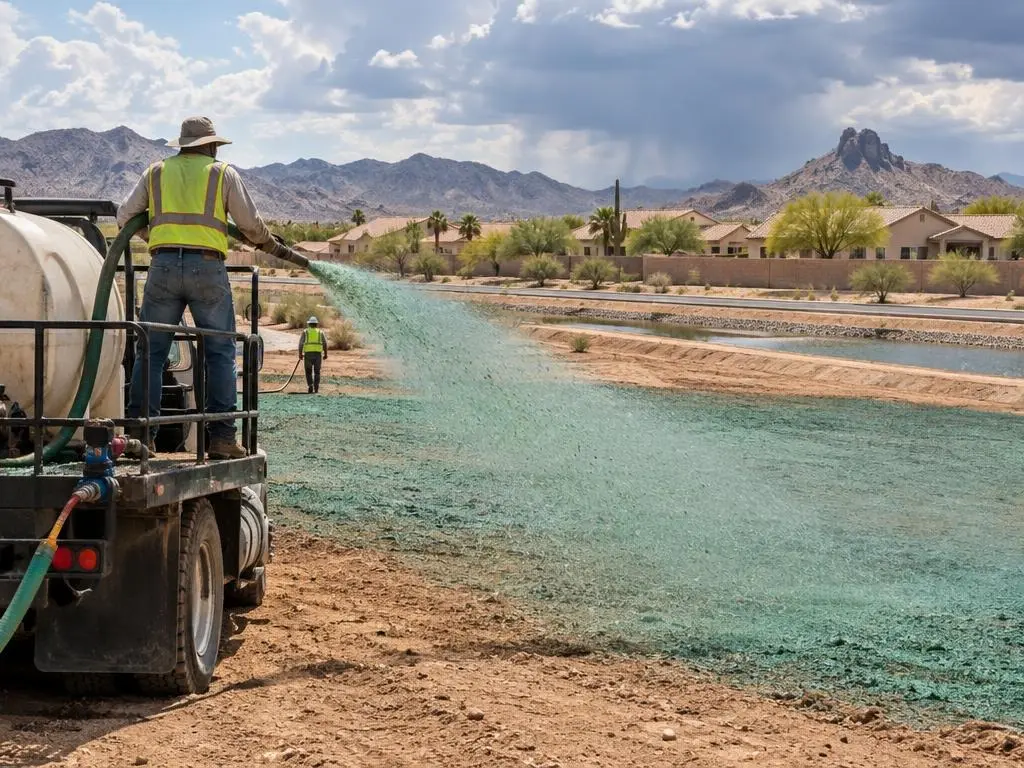
Once the site is stabilized, controls are removed and the trench lines smoothed. We can seed or hydromulch the disturbed strip.
Silt Fence & Inlet Protection Service Areas
- Hydroseeding in Phoenix, AZ
- Hydroseeding in Scottsdale, AZ
- Hydroseeding in Mesa, AZ
- Hydroseeding in Chandler, AZ
- Hydroseeding in Gilbert, AZ
- Hydroseeding in Tempe, AZ
- Hydroseeding in Glendale, AZ
- Hydroseeding in Peoria, AZ
- Hydroseeding in Surprise, AZ
- Hydroseeding in Goodyear, AZ
- Hydroseeding in Avondale, AZ
- Hydroseeding in Buckeye, AZ
- Hydroseeding in Queen Creek, AZ
- Hydroseeding in San Tan Valley, AZ
- Hydroseeding in Maricopa, AZ
- Hydroseeding in Apache Junction, AZ
- Hydroseeding in Fountain Hills, AZ
- Hydroseeding in Paradise Valley, AZ
- Hydroseeding in Cave Creek, AZ
- Hydroseeding in Carefree, AZ
- Hydroseeding in Anthem, AZ
- Hydroseeding in El Mirage, AZ
- Hydroseeding in Litchfield Park, AZ
Get a Silt Fence & Inlet Protection Estimate
Free silt fence and inlet protection estimates in Phoenix.