
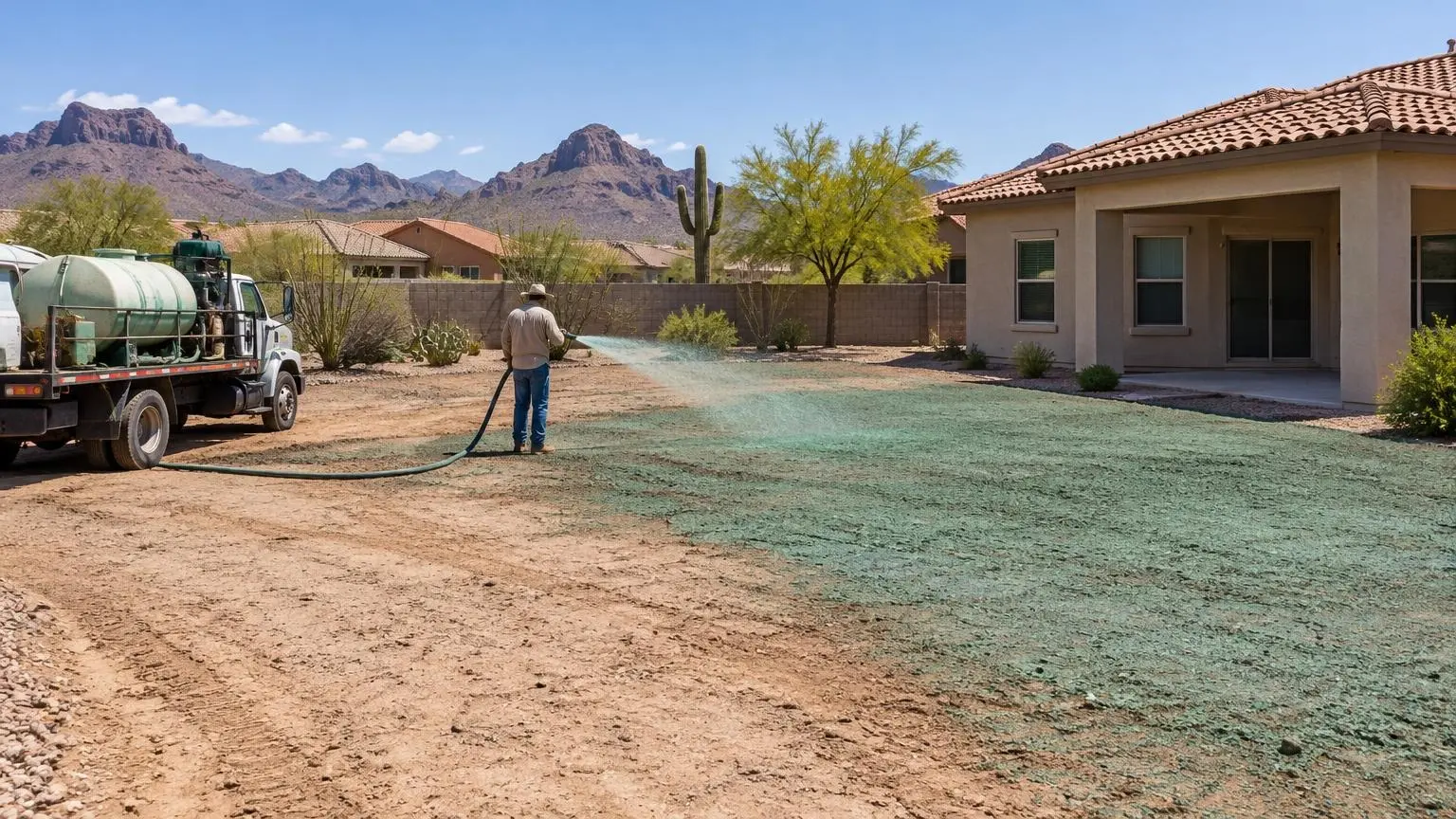
393 square miles of room
Hydroseeding in Buckeye, AZ
Arizona's second-largest city by area, still mostly being built.
- We look at your lot at no charge and quote it in writing
- Seed picked for the season: bermuda in summer, ryegrass in fall, natives for desert ground
- A written watering plan with every new seeding
Seeding on Buckeye's open ground
Hydroseeding in Buckeye deals with scale. The city covers about 393 square miles, making it Arizona's second-largest city by area, and its limits reach 30 miles north and 16 miles south of the original town center. Buckeye was the fastest-growing U.S. city in 2017, 2018 and 2021, and nearly 30 master-planned communities are planned, including Teravalis for close to 300,000 people.
Two kinds of soil
Buckeye's soils are described as alkaline and mostly well-drained loam or clay loam, with gravelly sand or sandy loam in northern areas such as Verrado. That split matters. The loam and clay loam found across most of the city hold water and take seed well. Gravelly northern soils drain fast and dry out, so seed there needs a thicker hydromulch layer and more frequent watering at first, and native grass seeding is often the better choice on open ground.
Dust control on raw land
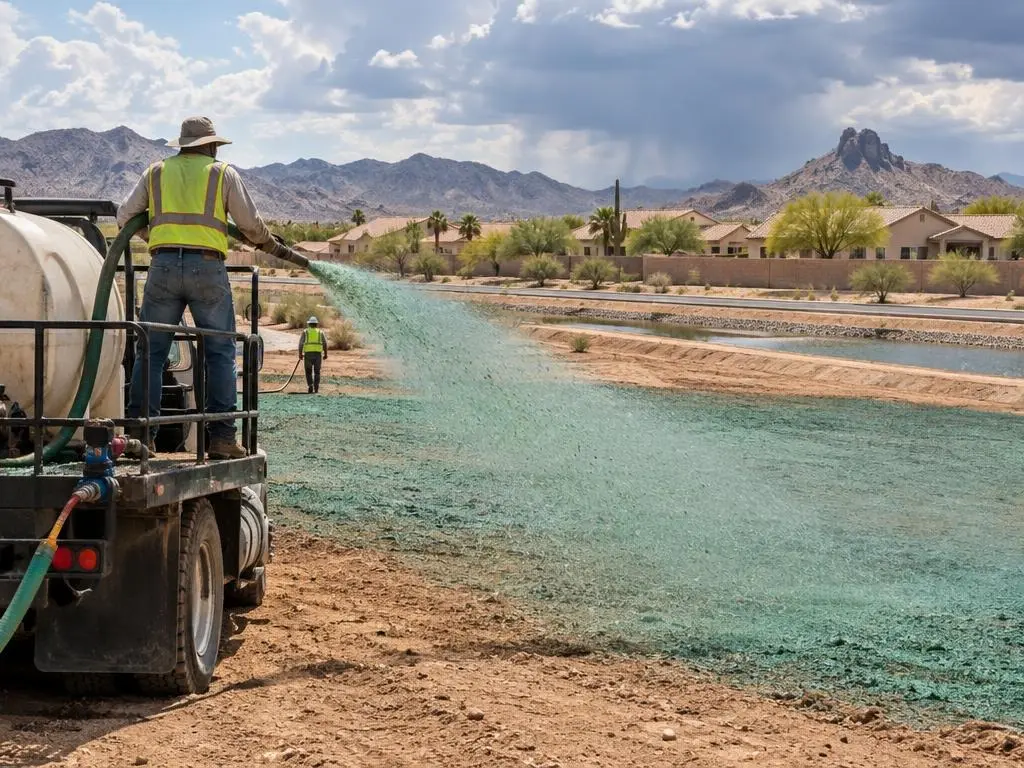
With so much ground being cleared at once, blowing dust is a constant issue. Hydromulch with a tackifier binds bare soil on graded lots and common areas until landscaping goes in, and it is quicker to apply over large acreage than straw. For sites that will sit open for months, a native seed mix in the slurry adds long-term cover.
The hottest and driest end of the Valley
Buckeye averages 7.91 inches of rain a year and reaches 100 degrees on about 121 afternoons a year. The record high is 128 degrees, set July 28, 1995. New seed needs a reliable irrigation plan from day one.
Mountains on both sides
The southern White Tank Mountains lie inside the city, with Skyline Regional Park covering 8,700 acres of mountain preserve. The Buckeye Hills sit to the south. Lots near either range need grading to handle storm runoff, and cut slopes need slope stabilization.
Buckeye work
- Dust control hydromulch on graded lots and phases
- Native seeding on open space and disturbed desert
- Hydroseed lawns in new Verrado, Sundance and Westpark yards
- Silt fence and inlet protection for builders
Get a free estimate or call (602) 497-4426.
Buckeye ground conditions
- Soils. Buckeye's soils are alkaline, mostly loam or clay loam, with gravelly sand or sandy loam in northern areas like Verrado.
- Heat. Buckeye averages 121 afternoons a year at 100 degrees and set a record high of 128 degrees in 1995.
- Canal origin. Malie M. Jackson built 10 miles of the Buckeye Canal between 1884 and 1886, which gave the town its name.
- Skyline park. Skyline Regional Park is an 8,700-acre preserve in the southern White Tank Mountains.
Buckeye Questions
Why does my Verrado yard dry out faster than my friend's lawn near downtown Buckeye?
Northern Buckeye soils are more gravelly and sandy, so water drains quickly. New seed there needs thicker mulch and more frequent watering.
Can hydromulch control dust on a lot that will not be landscaped for months?
Yes. Tackified hydromulch holds the surface, and adding native seed gives longer-lasting cover.
Is native seeding a good choice for open areas in Buckeye?
For areas that will not be irrigated, native seed blends usually make more sense than turf.
Do you handle large acreage?
Yes. Hydroseeding is well suited to large areas because a truck covers ground quickly.
Free Estimates in Buckeye, AZ
Free estimates for Buckeye lots, phases and lawns.
Hydroseeding Near Buckeye
- Hydroseeding in Phoenix, AZ
- Hydroseeding in Scottsdale, AZ
- Hydroseeding in Mesa, AZ
- Hydroseeding in Chandler, AZ
- Hydroseeding in Gilbert, AZ
- Hydroseeding in Tempe, AZ
- Hydroseeding in Glendale, AZ
- Hydroseeding in Peoria, AZ
- Hydroseeding in Surprise, AZ
- Hydroseeding in Goodyear, AZ
- Hydroseeding in Avondale, AZ
- Hydroseeding in Queen Creek, AZ
- Hydroseeding in San Tan Valley, AZ
- Hydroseeding in Maricopa, AZ
- Hydroseeding in Apache Junction, AZ
- Hydroseeding in Fountain Hills, AZ
- Hydroseeding in Paradise Valley, AZ
- Hydroseeding in Cave Creek, AZ
- Hydroseeding in Carefree, AZ
- Hydroseeding in Anthem, AZ
- Hydroseeding in El Mirage, AZ
- Hydroseeding in Litchfield Park, AZ