
Valley floor, 1,086 feet
Hydroseeding in Phoenix, AZ
Seed, mulch and water plans built for a city that averages about 111 days a year at 100 degrees or more.
- We look at your lot at no charge and quote it in writing
- Seed picked for the season: bermuda in summer, ryegrass in fall, natives for desert ground
- A written watering plan with every new seeding
Growing grass on the Phoenix valley floor
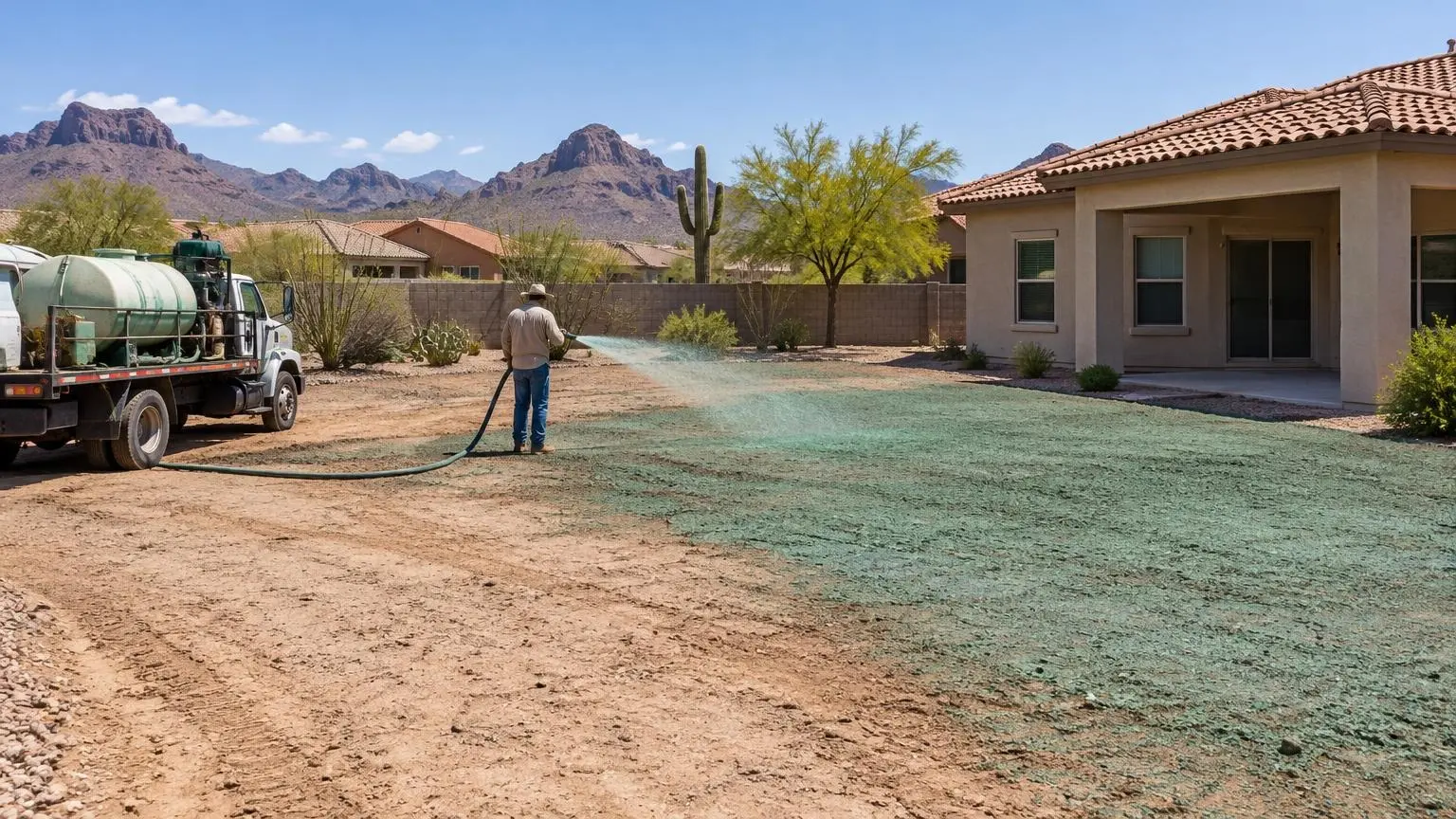
Hydroseeding in Phoenix works when the schedule respects the weather. The city sits at a mean elevation of 1,086 feet in the northern Sonoran Desert, gets about 7.22 inches of rain a year at Sky Harbor, and averages roughly 111 days with highs of at least 100 degrees. A hydroseed lawn here is less about the spray itself and more about what happens in the first three weeks after it: water, mulch cover and heat.
Working with the 110-degree days
In 2024 the city logged 70 days at 110 degrees or higher and a 113-day run of 100-degree highs from late May to mid-September. Warm-season grasses like bermuda want warm soil, but a young seedling under that kind of sun dries out fast. We lean on a heavier hydromulch rate in summer so the seed bed holds moisture between cycles, and we talk through irrigation timing before the truck shows up, not after.
The monsoon window
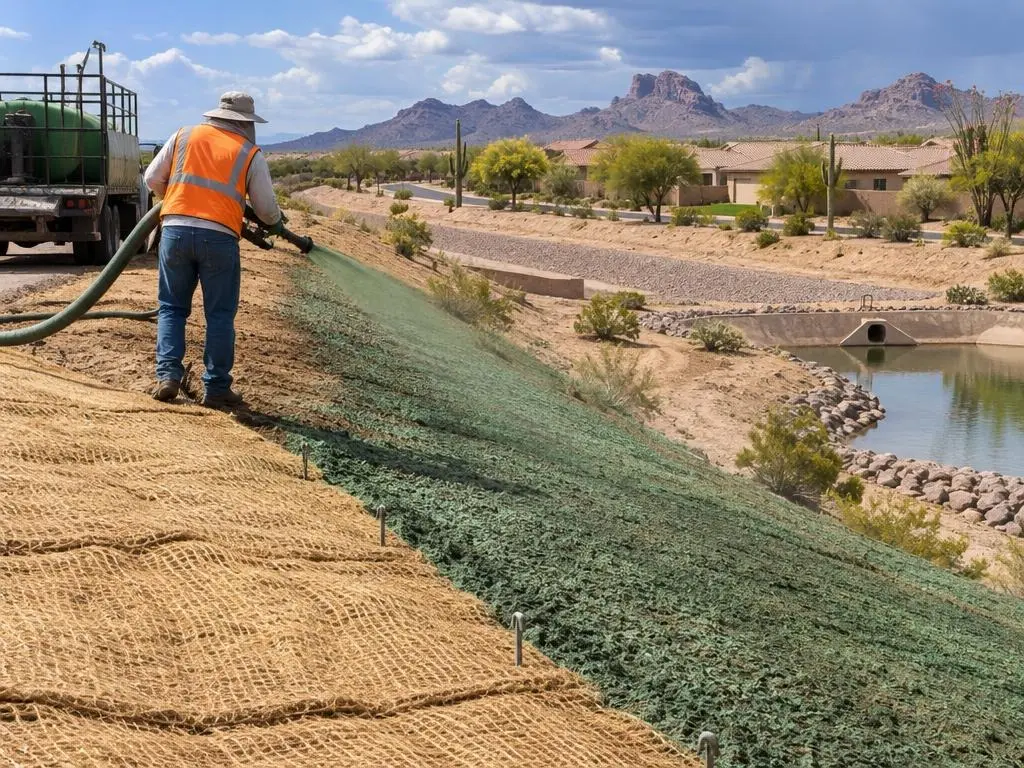
The National Weather Service treats June 15 through September 30 as monsoon season. Storms can drop heavy rain on one neighborhood and nothing on the next, and they bring wind and dust. Fresh seed on a bare, graded yard can wash into the street or get buried. For erosion control on sloped yards or swales, we pick a bonded fiber matrix or a straw blanket instead of standard mulch during those months.
Calcic soil under the yard
Much of the valley floor sits on old fan and stream alluvium. USDA describes the Mohall series, with its type location in Maricopa County, as a coarse sandy loam over a calcic horizon starting 20 to 40 inches down. That lime-rich layer slows drainage. Before new lawn installation we check how fast water soaks in, rip or till compacted ground, and bring in topsoil where the grade has been scraped down to hard material.
Mountains inside the city
Phoenix is mostly flat, which is why the streets run on a grid, but Camelback, North Mountain, Sunnyslope Mountain and Piestewa Peak sit inside the valley, and South Mountain Park borders the south side. Homes on the lower slopes get runoff from above. Those lots usually need a swale, some yard grading and slope stabilization before any grass seeding is worth doing.
What Phoenix properties typically need
- Fine grading and topsoil on scraped new-construction lots
- Hydroseeding bermuda in the warm months, with winter overseeding as an option
- Erosion control blankets or BFM on slopes and swales before monsoon storms
- Silt fence and inlet protection on builder lots near storm drains
Get a free estimate or call (602) 497-4426.
Phoenix ground and weather, in numbers
- Rainfall. Sky Harbor averages about 7.22 inches of rain a year, so new seed depends on irrigation.
- Monsoon dates. Since 2008 the National Weather Service has set June 15 to September 30 as monsoon season in Phoenix.
- Extreme heat. In 2024 Phoenix recorded 70 days at 110 degrees or higher and a 113-day streak of 100-degree highs.
- Subsoil lime. The Mohall soil series, typed in Maricopa County, carries a calcic horizon starting 20 to 40 inches deep.
- Mountain parks. South Mountain Park is described as the largest municipal park in the United States.
Phoenix Questions
What part of the Phoenix calendar suits a new bermuda hydroseed lawn?
Late spring, once nights stay warm, gives seedlings time to root before the hottest weeks. Early fall also works. Midsummer is possible with heavier mulch and steady irrigation, but it takes more water.
Will a monsoon storm wash my new hydroseed away?
A hard storm in the first week can move seed on a slope or a bare swale. On flat, well-mulched yards it usually holds. On slopes we recommend a tackifier, BFM or an erosion control blanket.
Do I need to deal with caliche before seeding?
Not always. If water puddles or drains very slowly, we break up the compacted layer near the surface and add topsoil so roots have room.
Can I keep my lawn green in winter?
Bermuda goes dormant in cooler months. Many Phoenix owners overseed with ryegrass in fall for winter color, then let the bermuda return in spring.
Free Estimates in Phoenix, AZ
Free estimates for hydroseeding anywhere in Phoenix.
Hydroseeding Near Phoenix
- Hydroseeding in Scottsdale, AZ
- Hydroseeding in Mesa, AZ
- Hydroseeding in Chandler, AZ
- Hydroseeding in Gilbert, AZ
- Hydroseeding in Tempe, AZ
- Hydroseeding in Glendale, AZ
- Hydroseeding in Peoria, AZ
- Hydroseeding in Surprise, AZ
- Hydroseeding in Goodyear, AZ
- Hydroseeding in Avondale, AZ
- Hydroseeding in Buckeye, AZ
- Hydroseeding in Queen Creek, AZ
- Hydroseeding in San Tan Valley, AZ
- Hydroseeding in Maricopa, AZ
- Hydroseeding in Apache Junction, AZ
- Hydroseeding in Fountain Hills, AZ
- Hydroseeding in Paradise Valley, AZ
- Hydroseeding in Cave Creek, AZ
- Hydroseeding in Carefree, AZ
- Hydroseeding in Anthem, AZ
- Hydroseeding in El Mirage, AZ
- Hydroseeding in Litchfield Park, AZ