
The ground under the grass
Grading, Topsoil & Dirt Work in Phoenix, AZ
Yards and lots graded to drain, compacted ground opened up, and topsoil placed where seed needs it.
- We look at your lot at no charge and quote it in writing
- Seed picked for the season: bermuda in summer, ryegrass in fall, natives for desert ground
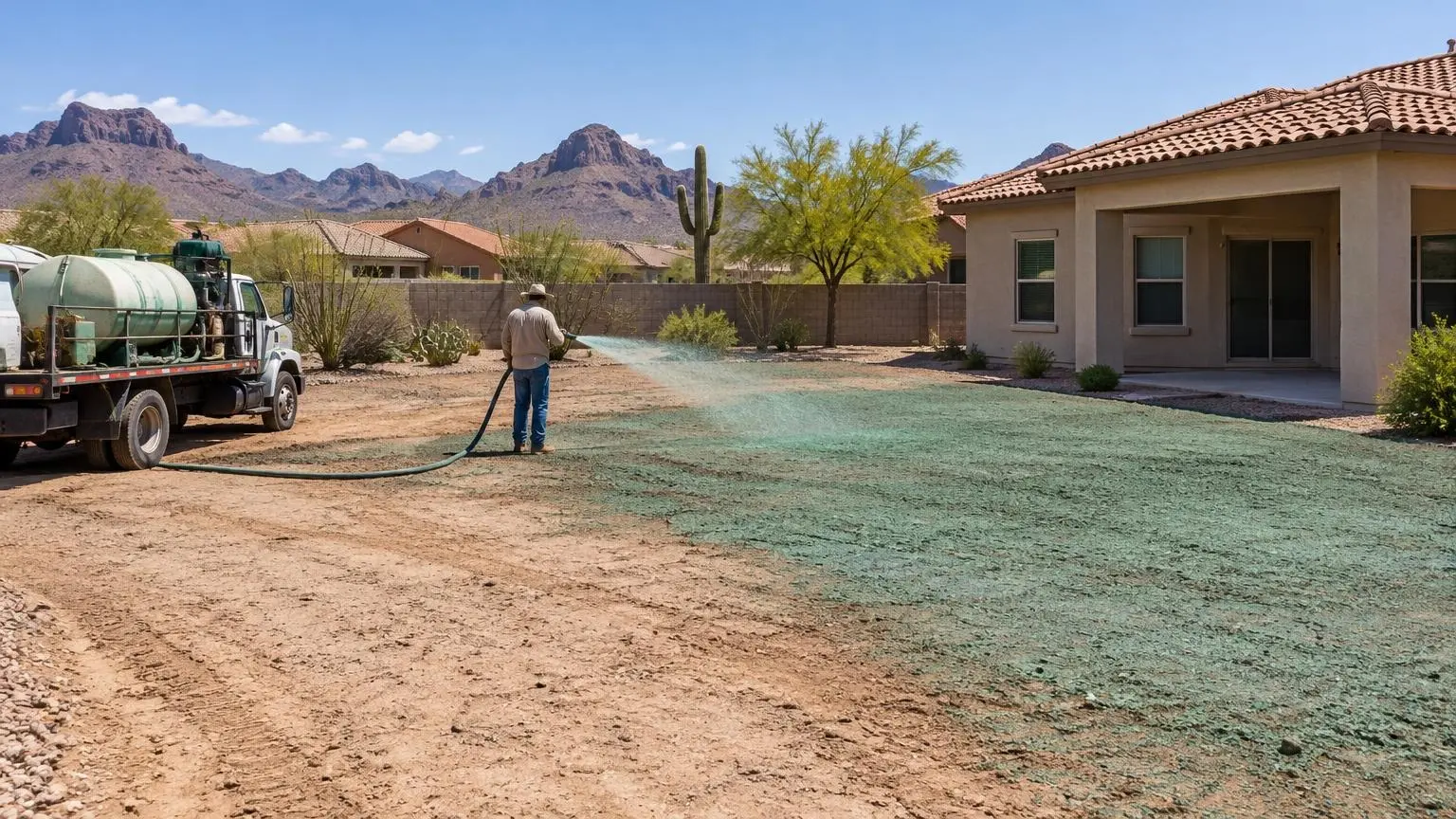
- A written watering plan with every new seeding
Dirt Work Before the Seed Truck Arrives
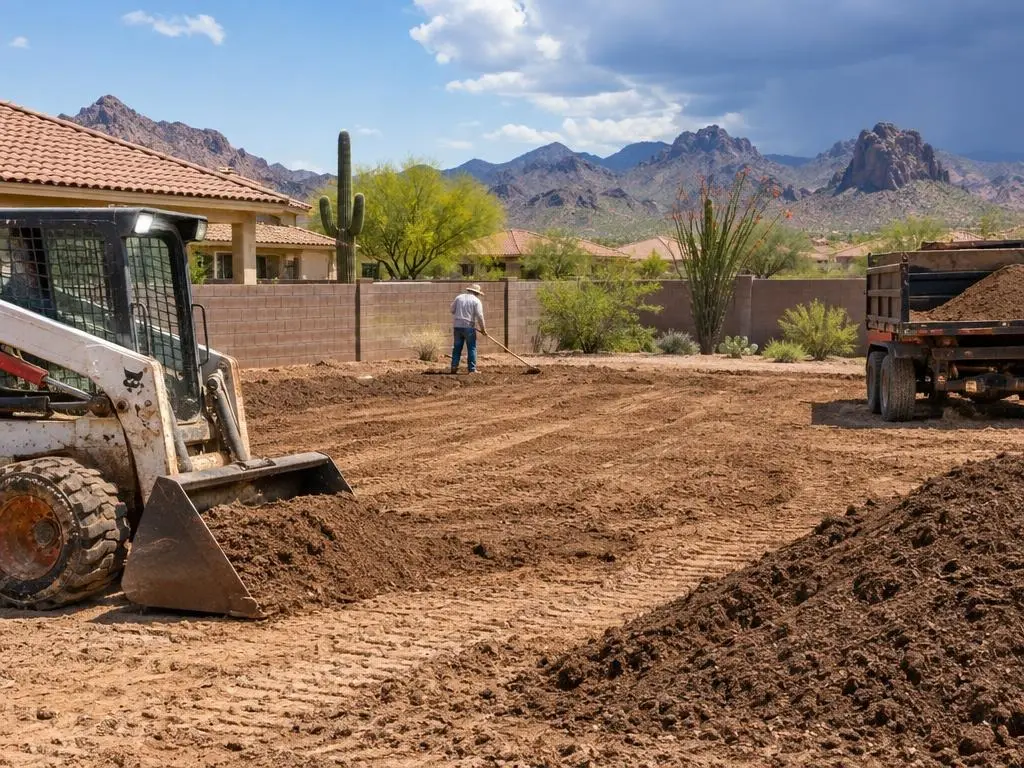
Grading, topsoil and dirt work decide whether a Phoenix lawn or seeded slope succeeds before any seed is mixed. A yard that drains toward the slab, a lot compacted by months of equipment traffic, or a surface left as bare subsoil after a builder's cut will undo the best hydroseed application. We handle yard grading and land grading, ripping and tilling, fine grading, topsoil delivery and spreading, and drainage swales, so the ground is ready when we seed it. The same equipment and operators dig drainage trenches and do small excavation jobs too: French drains, buried downspout lines and shallow runs to basins.
What Valley ground looks like after construction
Away from the mountains, Phoenix is generally flat, so small grade mistakes matter. On a flat lot, a low spot of an inch or two holds water against a wall or turns a corner of the lawn into a puddle after every monsoon storm. Much of the valley floor is old fan and stream alluvium. The USDA's Mohall series, typed in Maricopa County, is a sandy loam at the surface over a lime-rich calcic horizon starting 20 to 40 inches down, with moderately slow permeability. Builders compact pads hard for slabs, and that compaction often spreads into the yard. We break it up so roots and water can get down.
Yard grading for drainage
Good yard grading sends water off the foundation toward a planned outlet: a retention area, a yard drain or the street, depending on what the lot's drainage plan allows. In Phoenix many subdivisions rely on on-lot or shared retention, so we check where the water is supposed to go before we move dirt. Then we set grades, cut and fill, and fine grade the surface smooth enough for seed. On lots where a swale runs along the property line, we shape it so it carries water without cutting.
Topsoil, and when you need it
Not every yard needs imported topsoil. Where the native sandy loam is intact, ripping and adding organic amendment may be enough. Where grading has exposed subsoil, rock or construction fill at the surface, a few inches of screened topsoil gives seed something to root into. Cost guides put bulk topsoil at roughly $10 to $55 per cubic yard plus delivery, with spreading billed by the hour. We tell you whether it is worth it on your lot.
Permits for dirt work in Phoenix
The City of Phoenix requires a grading permit for grading, filling or excavating unless the work fits narrow exceptions, and those exceptions only apply while total land disturbance stays at one acre or less. Among them: excavation less than two feet deep that does not create a cut slope over five feet high and steeper than 1 to 1.5, and fill less than one foot deep, on terrain flatter than 1 to 5, not over 100 cubic yards on the site and not blocking a drainage course. Work in a wash or flood hazard area, or on land zoned as hillside, needs a permit regardless. Most residential yard grading falls within the exceptions, but not all of it; we check before we dig.
Dust while we work
Graded dirt in Phoenix is a dust source, and the PM10 dust that blows off disturbed construction sites is one of the things linked to Valley Fever in the region. We water down work areas as we go and aim to seed or cover graded ground soon after we finish, rather than leaving it bare for weeks.
The lime layer under the yard
The calcic horizon the USDA describes in Mohall soils is a layer where calcium carbonate has built up as filaments, masses and concretions. Homeowners often call any hard, whitish layer caliche. It does not usually stop a lawn on its own, but it slows water moving down, so heavy irrigation can perch above it and keep the root zone soggy while the surface looks dry. When we hit a hard layer in a lawn area, we tell you how deep it is, and if drainage is a problem we can break through it in spots or route water away with a swale or drain rather than burying it under more fill.
Timing grading around storms
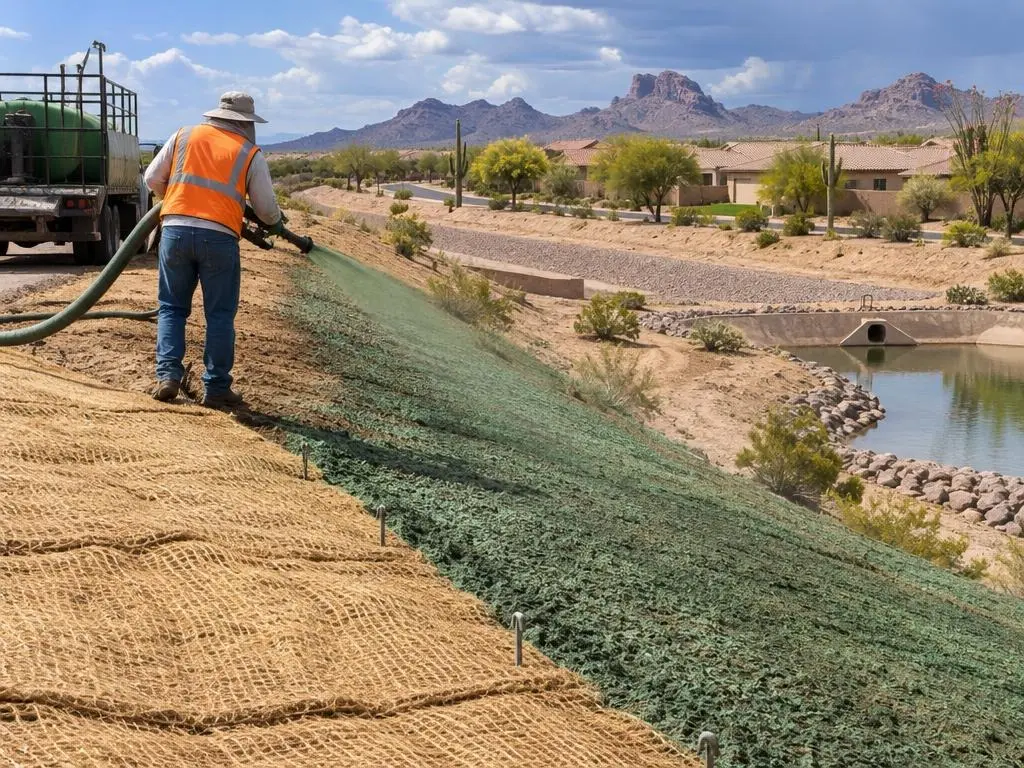
We prefer to grade lawn and slope areas in late spring or after the monsoon, then seed or cover right away. Grading in July and leaving the dirt open is the riskiest plan: a single storm can rut a fresh fine grade and push it onto the patio or into the street. When a summer schedule cannot be avoided, we grade in smaller sections and cover each one before moving on.
Typical dirt work jobs
- Regrading a yard that drains toward the house
- Ripping and fine grading a new-build backyard
- Topsoil for a lawn area that was left as subsoil
- Swales and shallow trenches to a retention area
- Leveling low spots before a lawn renovation
Dirt Work We Do
Getting the ground right before seed, sod or landscaping.
Yard grading
Grades set so water moves away from the house to a planned outlet.
Land grading
Rough and fine grading on larger lots and open areas.
Ripping and tilling
Breaking up compacted ground so roots and water get in.
Topsoil
Screened topsoil delivered and spread where subsoil is exposed.
Drainage swales
Shaped swales along lot lines and to retention areas.
Excavation and trenching
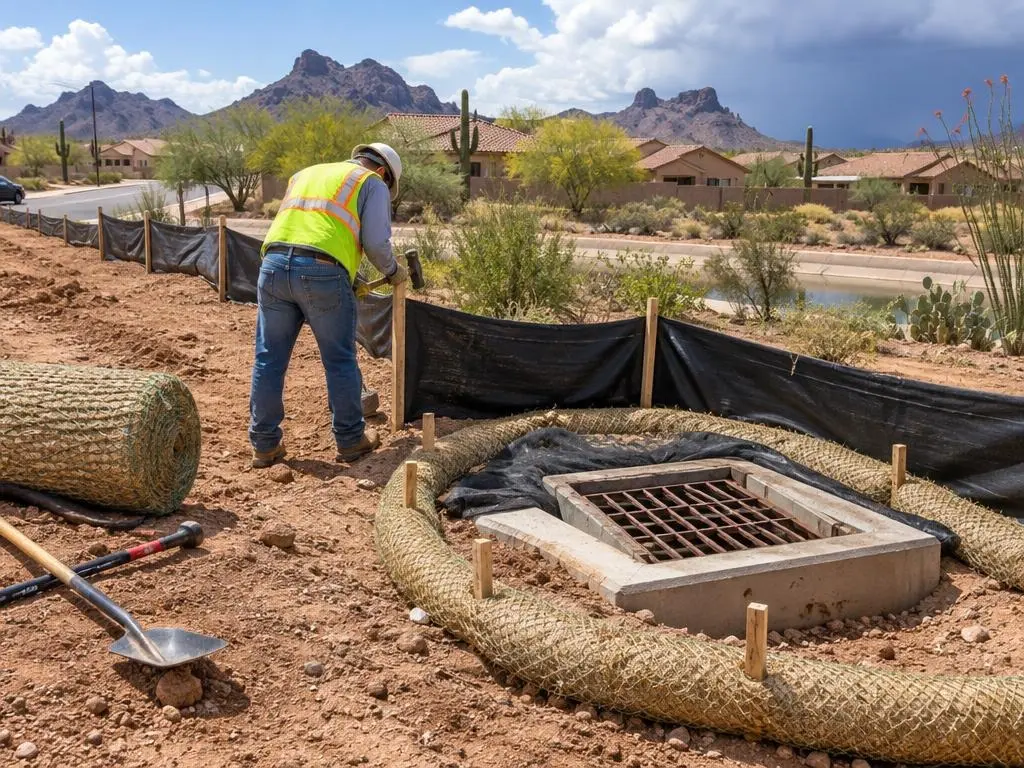
French drains, buried downspouts and shallow drainage trenches.
Typical Grading & Topsoil Costs
| Work | Typical range |
|---|---|
| Lawn leveling, per sq ft (HomeAdvisor) | $1 to $2 |
| Lawn reslope, average (HomeAdvisor) | $2,176 |
| Fine grading, per sq ft (Lawn Love) | $0.08 to $1.00 |
| Residential resloping (Lawn Love) | $770 to $3,000 |
| Grading labor, per hour (HomeAdvisor) | $50 to $100 |
| Topsoil, per cubic yard (Angi) | $10 to $55 |
| Angi: topsoil delivery to your lot, each load up to 15 cu yd | $50 to $150 |
These come from national cost guides, so use them to get a feel for the work rather than as a Phoenix price. Access, soil, rock, haul-off and permits change a job. National numbers for context; we put a firm number in writing after the visit.
How Dirt Work Goes
1. Check drainage
We find where water should go and whether a permit applies.
2. Rough grade
Cut, fill and shape to the planned grades.
3. Open the soil
Rip or till compacted ground; add topsoil where needed.
4. Fine grade
A smooth, seed-ready surface with positive drainage.
5. Seed or cover
Hydroseed or hydromulch soon after, so the dirt does not sit bare.
Why Choose Us for Grading, Topsoil & Dirt Work
Graded for seed
We finish the surface the way a seeding crew needs it, because we are that crew.
Permit thresholds checked
We know where Phoenix's grading exemptions stop.
No long bare spells
Graded ground gets covered quickly to limit dust and erosion.
Grading, Topsoil & Dirt Work Questions
Do I need a grading permit to regrade my backyard in Phoenix?
Often not, if the work is shallow: the city exempts excavation under two feet and fill under one foot on flatter ground, up to 100 cubic yards, as long as total disturbance stays at an acre or less and no drainage course is blocked. Work near a wash, on hillside-zoned land or beyond those limits needs a permit.
Do I need topsoil before hydroseeding?
Only where the surface is subsoil, rock or fill. Intact native sandy loam usually just needs ripping and amendment.
How much does yard grading cost?
HomeAdvisor's figures run $1 to $2 a square foot to level a lawn and about $2,176 for an average reslope. Your price depends on how much dirt moves and how easy the access is.
Can you dig a trench for a French drain?
Yes. Our grading crews handle excavation and trenching for drainage, including French drains and buried downspout lines.
Grading, Topsoil & Dirt Work Service Areas
- Hydroseeding in Phoenix, AZ
- Hydroseeding in Scottsdale, AZ
- Hydroseeding in Mesa, AZ
- Hydroseeding in Chandler, AZ
- Hydroseeding in Gilbert, AZ
- Hydroseeding in Tempe, AZ
- Hydroseeding in Glendale, AZ
- Hydroseeding in Peoria, AZ
- Hydroseeding in Surprise, AZ
- Hydroseeding in Goodyear, AZ
- Hydroseeding in Avondale, AZ
- Hydroseeding in Buckeye, AZ
- Hydroseeding in Queen Creek, AZ
- Hydroseeding in San Tan Valley, AZ
- Hydroseeding in Maricopa, AZ
- Hydroseeding in Apache Junction, AZ
- Hydroseeding in Fountain Hills, AZ
- Hydroseeding in Paradise Valley, AZ
- Hydroseeding in Cave Creek, AZ
- Hydroseeding in Carefree, AZ
- Hydroseeding in Anthem, AZ
- Hydroseeding in El Mirage, AZ
- Hydroseeding in Litchfield Park, AZ
Get a Grading, Topsoil & Dirt Work Estimate
Free grading and topsoil estimates in Phoenix.