
Higher and cooler, 2,553 feet
Hydroseeding in Cave Creek, AZ
Rural desert lots, a creek through the west side and an August monsoon peak.
- We look at your lot at no charge and quote it in writing
- Seed picked for the season: bermuda in summer, ryegrass in fall, natives for desert ground
- A written watering plan with every new seeding
Seeding at Cave Creek elevation
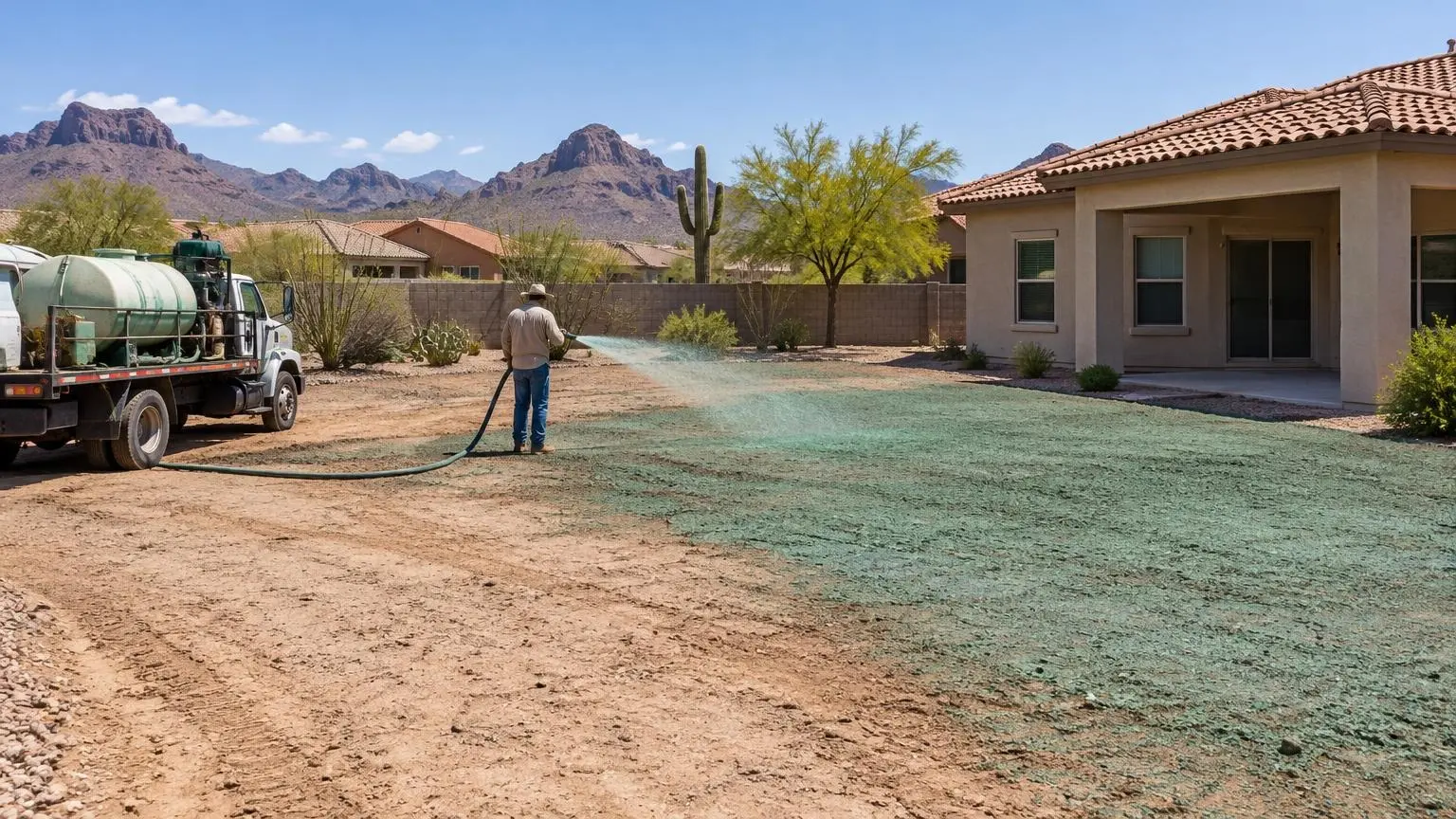
Hydroseeding in Cave Creek is mostly about putting the desert back after construction. At about 2,553 feet, the town is cooler than the lower Valley and sits in a semi-arid climate with more rain than a true desert. Big rural lots, washes and rocky ground mean native seeding and erosion control are more common requests than large lawns.
Rain arrives in August
Cave Creek averages about 11.18 inches of precipitation a year. The monsoon runs July through September, and August is the wettest month at about 1.77 inches over roughly six rainy days. Native seed sprayed in early summer, ahead of that rain, can germinate with the storms. The same storms erode any bare slope, so the mulch has to be bonded well enough to hold.
The creek and the mountains
Cave Creek itself flows through the western side of town and south into Phoenix. Black Mountain rises to 3,398 feet on the border with Carefree, and Elephant Mountain reaches 3,926 feet at the north end. Lots along the creek or below the mountains see runoff, so grading and slope stabilization come first.
Spur Cross and protected land
Spur Cross Ranch, 2,154 acres of Sonoran desert bought in 2000 for 21 million dollars, is now a Maricopa County park with unusual cacti, stone formations and Hohokam artifacts. Many homes border open desert like this. Revegetating disturbed ground with a native seed mix helps a property blend into the land around it.
Gold-town history
Prospectors found gold here in 1873, and the Golden Reef Stamp Mill is preserved at the Cave Creek Museum. Old mining and ranch disturbance still shows up as bare, compacted ground on some properties.
What Cave Creek properties need
- Native grass and wildflower seeding after construction
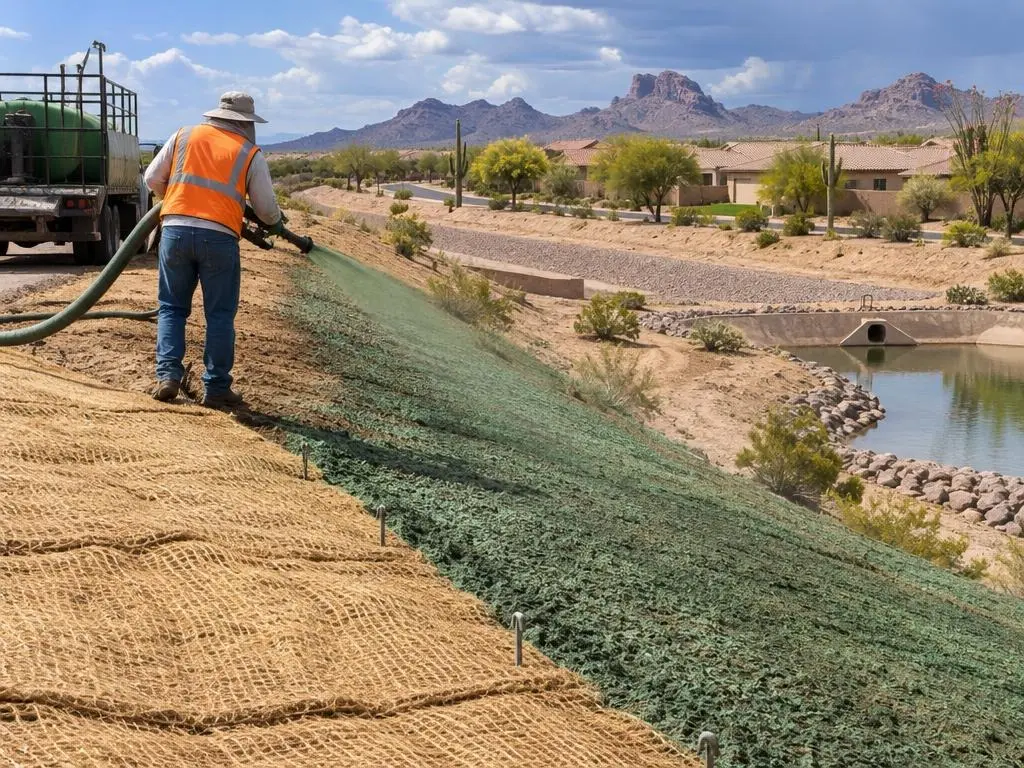
- Bonded fiber matrix on cut slopes and driveway banks
- Silt fence near the creek and washes
- Small hydroseed lawns where owners want them
Get a free estimate or call (602) 497-4426.
Cave Creek climate and terrain
- Elevation. Cave Creek sits at about 2,553 feet, cooler than the lower Phoenix area.
- Rainfall. Average precipitation is about 11.18 inches a year; August is wettest at about 1.77 inches.
- Mountains. Black Mountain rises to 3,398 feet and Elephant Mountain to 3,926 feet within the town.
- Spur Cross. Spur Cross Ranch covers 2,154 acres and was bought in 2000 for 21 million dollars.
Cave Creek Questions
When should I seed native plants on my Cave Creek lot?
Early summer, just ahead of the July to September monsoon, lets the rain help with germination.
Can you make disturbed ground look like the surrounding desert?
A native seed mix in hydromulch is the best way to get it back toward natural cover.
Do I need silt fence near Cave Creek?
If your project disturbs ground that drains toward the creek or a wash, silt fence is a sensible precaution.
Does grass grow well at this elevation?
Yes, with irrigation. It is a bit cooler here, which helps in summer.
Free Estimates in Cave Creek, AZ
Free Cave Creek native seeding estimates.
Hydroseeding Near Cave Creek
- Hydroseeding in Phoenix, AZ
- Hydroseeding in Scottsdale, AZ
- Hydroseeding in Mesa, AZ
- Hydroseeding in Chandler, AZ
- Hydroseeding in Gilbert, AZ
- Hydroseeding in Tempe, AZ
- Hydroseeding in Glendale, AZ
- Hydroseeding in Peoria, AZ
- Hydroseeding in Surprise, AZ
- Hydroseeding in Goodyear, AZ
- Hydroseeding in Avondale, AZ
- Hydroseeding in Buckeye, AZ
- Hydroseeding in Queen Creek, AZ
- Hydroseeding in San Tan Valley, AZ
- Hydroseeding in Maricopa, AZ
- Hydroseeding in Apache Junction, AZ
- Hydroseeding in Fountain Hills, AZ
- Hydroseeding in Paradise Valley, AZ
- Hydroseeding in Carefree, AZ
- Hydroseeding in Anthem, AZ
- Hydroseeding in El Mirage, AZ
- Hydroseeding in Litchfield Park, AZ