
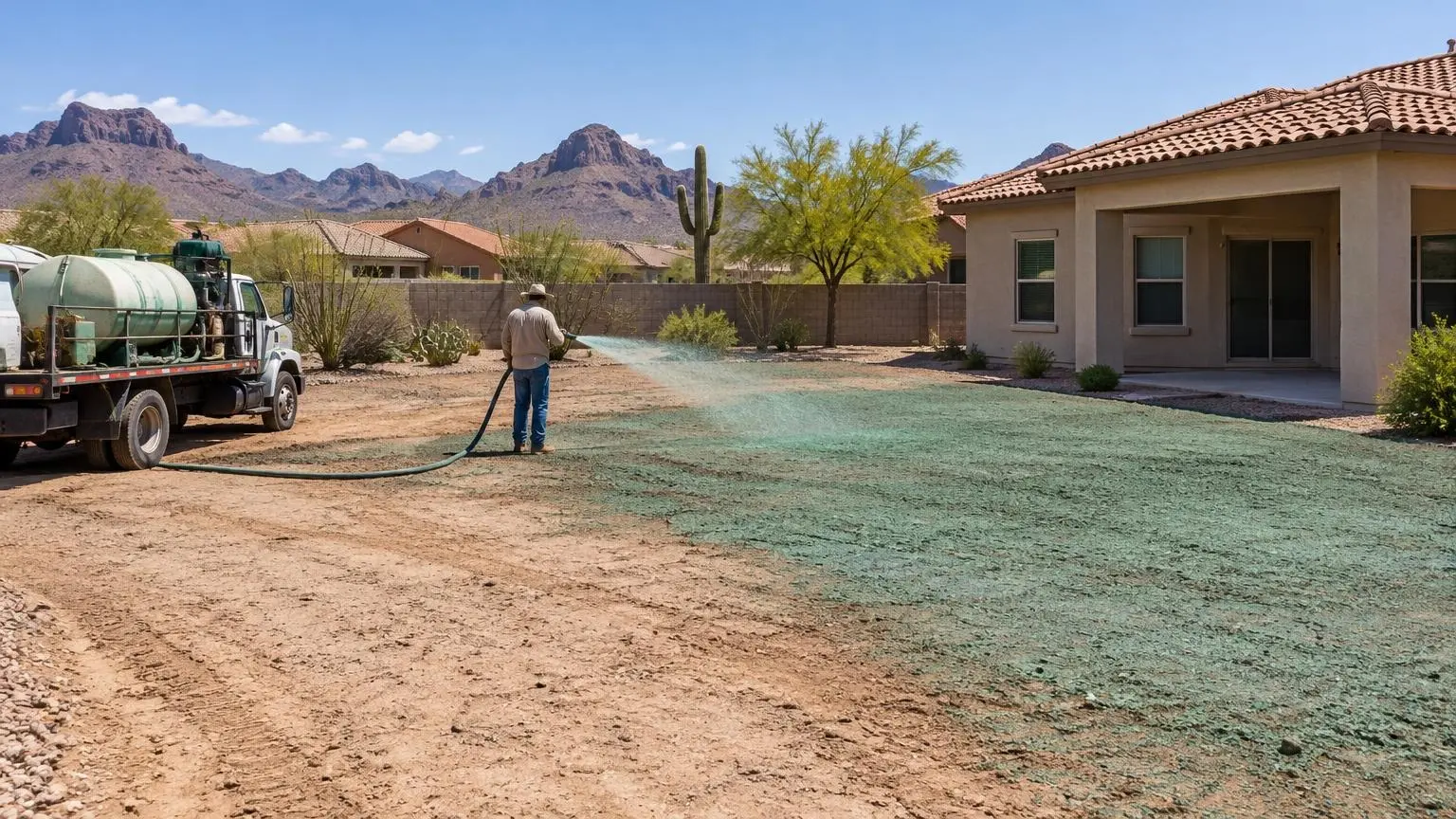
Acres, not square feet
Builder & Commercial Hydroseeding in Phoenix, AZ
Seed and hydromulch for subdivisions, basins and commercial sites, applied to the plan and the stormwater permit.
- We look at your lot at no charge and quote it in writing
- Seed picked for the season: bermuda in summer, ryegrass in fall, natives for desert ground
- A written watering plan with every new seeding
Big Sites on a Fast-Growing Valley Floor
Builder and commercial hydroseeding covers the jobs measured in acres: subdivision common areas and retention basins, commercial and industrial pads waiting on a tenant, school fields, park turf, utility corridors and road shoulders around Phoenix. Hydroseeding contractors earn their keep on this work because a truck and hose can cover ground no crew with spreaders can match in a day, and the mulch and tackifier hold seed in place in desert wind. We work for general contractors, developers, HOAs and property managers, and price per acre or per square foot depending on the job.
Why the Valley keeps this work coming
Maricopa County grew from 186,000 people in 1940 to about 1.5 million by 1980, and the growth came largely as residential tract developments on farmland and desert. That pattern has not stopped on the edges of the Valley. New subdivisions, freeway-corridor commercial pads and logistics sites all go through the same sequence: mass grading, utilities, paving, and then some mix of landscaping, basin stabilization and temporary cover on ground that will not be built for months. Much of that ground sits on old fan and stream alluvium, and it crusts and blows when left bare through a summer.
Stormwater permits drive the scope
Arizona requires construction general permit coverage for operators whose sites disturb an acre or more of ground, and that also reaches smaller parcels when they belong to a bigger planned development or sale. That coverage requires a stormwater pollution prevention plan that lists the control measures and their sequence, and a copy must be on site while work is underway. In Phoenix the city's grading code also points to the NPDES/AZPDES program for construction stormwater requirements. In practice, the SWPPP tells us what gets seeded or mulched, when, and what sediment control has to stay in place until final stabilization. We build our schedule around it and keep records you can drop into inspection reports.
Temporary cover vs permanent seed
Not every commercial job is a lawn. On a pad that will sit idle, the goal is a stabilized surface: hydromulch with tackifier, sometimes with a fast cover crop, to cut dust and sheet erosion. On basins and common areas meant to stay green under irrigation, common bermuda goes down in the warm months, often with a fall ryegrass overseed later if the HOA wants year-round color. On unirrigated open space and desert buffers, a native seed mix is the better call, which we cover on our native seeding page. We will tell you which approach fits each part of the site.
Timing around the monsoon
The National Weather Service treats June 15 through September 30 as monsoon season in Phoenix, when localized heavy rain, flash floods and strong winds arrive with little notice. That overlaps the bermuda seeding window. On big sites we prioritize basin side slopes and anything that drains toward the street or an inlet, so the areas that would shed sediment first get covered first. After a storm we check for rills and washouts and respray where needed.
Choosing among hydroseeding companies
Ask any hydroseeding company you are considering to price the same thing: the seed mix and pounds per acre, the mulch type and rate, fertilizer and tackifier, how many mobilizations, and who is responsible for water. Two bids that differ by half are often not for the same application. Ask how they handle access on an active site and whether they can set silt fence, fiber rolls or inlet protection on the same visit. We itemize all of it.
Idle pads, dust and Valley Fever
A commercial pad graded in spring and left until a tenant signs can sit bare for a year. In Phoenix that ground becomes a dust source. The city's own description of local air quality notes that coarse PM10 dust from storms and from disturbed agricultural or construction sites can reach concerning levels, and that people and animals exposed to it are at risk of Valley Fever, a fungal lung infection. A tackified hydromulch cover is one of the cheaper ways to hold that surface down. It is not permanent: sun and traffic break it down over months, so we tell owners how long to expect it to last and when a second application or a native seed mix makes more sense.
Water on large seedings
The single biggest variable on a big seeding job is water. Irrigated basins and parks need the system running and tested before we spray, with zones set for short, frequent cycles during germination. Unirrigated areas get seeded so rain does the work, which in Phoenix means fall and winter for most native species. Where neither works, we can price water trucks, but on most sites that is the expensive way to grow grass.
Hydroseeding services we provide on commercial sites
- Subdivision common areas, parks and basins
- Commercial and industrial pad stabilization
- Road shoulders, channels and utility corridors
- School and sports field seeding
- Temporary hydromulch for dust and erosion
Commercial Scope
Seed and cover for every part of a large site.
Retention basins
Basin bottoms and side slopes seeded and mulched, with heavier rates on the slopes.
Subdivision common areas
Turf and native areas for HOA tracts and open space.
Pad stabilization
Hydromulch cover for graded pads that will sit before construction.
Right-of-way and shoulders
Seeding along new roads, channels and utility corridors.
Parks and school fields
Bermuda turf seeded in the warm season on irrigated fields.
SWPPP stabilization
Final and interim stabilization applied to the plan, with records.
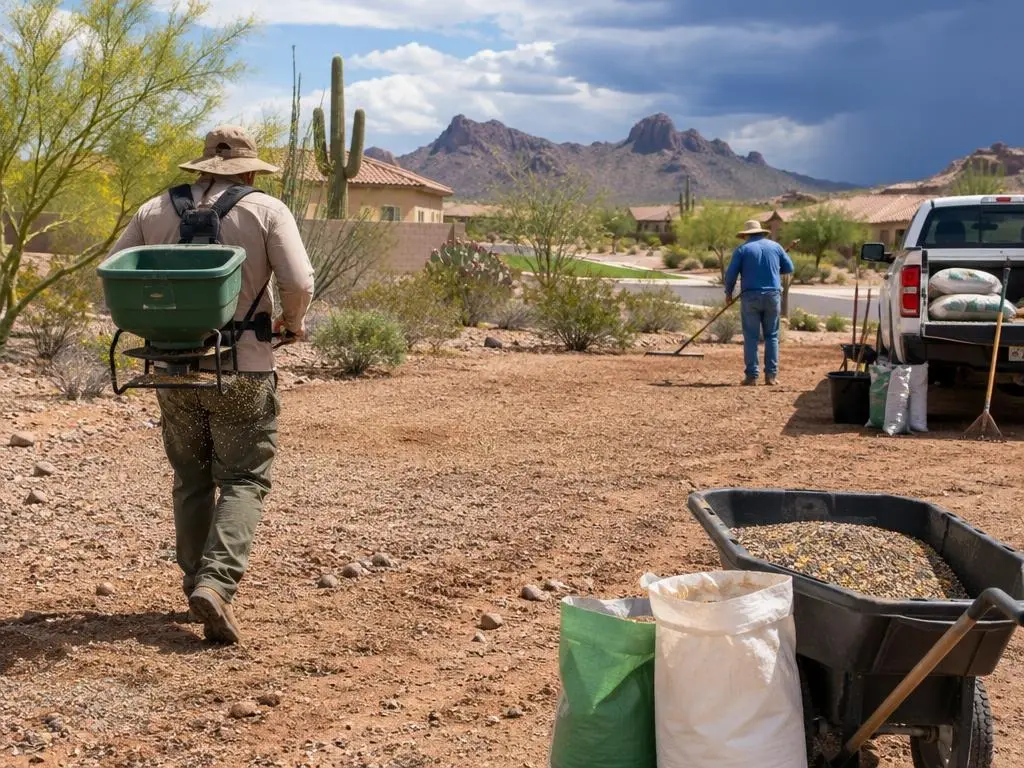
Typical Commercial Hydroseeding Costs
| Work | Typical range |
|---|---|
| Hydroseeding, per acre (LawnStarter) | $2,136 to $4,897 |
| Hydroseeding, per acre (Fixr) | $2,000 to $4,000 |
| Hydroseeding, 1 acre (HomeAdvisor) | $2,600 to $8,700 |
| Per-acre bids a city received for park seeding (North Little Rock, Arkansas, 2023) | $2,595 and $3,325 |
| Wood-fiber mulch, sprayed, per 1,000 sq ft (a transportation agency 2025 rate list) | $98 |
These are published national and agency figures, not Phoenix bids. Mix, rate, water, access and mobilizations change commercial pricing. National numbers for context; we put a firm number in writing after the visit.
How a Site Job Runs
1. Plan review
We read the landscape plan and SWPPP and walk the site with your superintendent.
2. Itemized bid
Seed, mulch, rates, water and mobilizations priced line by line.
3. Sequencing
Slopes and areas draining to inlets first, then flats.
4. Application
Truck and hose application at the specified rates.
5. Storm checks
Rills and washouts resprayed after monsoon storms.
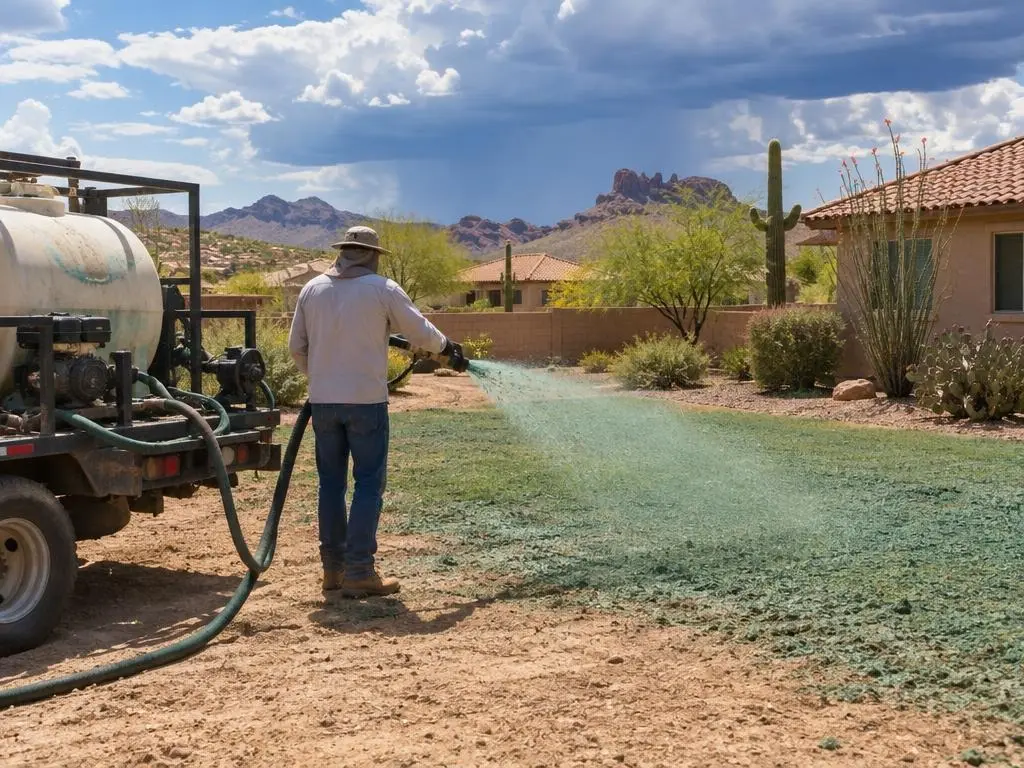
Why Choose Us for Builder & Commercial Hydroseeding
Bids you can compare
Every rate and material is a separate line.
One crew for seed and sediment
Silt fence, inlet protection and blankets on the same visit.
Monsoon-aware sequencing
The ground most likely to wash gets covered first.
Builder & Commercial Hydroseeding Questions
Do commercial sites in Phoenix need a SWPPP?
Arizona requires construction general permit coverage, which includes a SWPPP, for sites disturbing one acre or more, or smaller sites in a larger common plan of development. Your engineer or general contractor prepares the plan; we install the seeding and controls it calls for.
What do hydroseeding contractors charge per acre?
Consumer cost guides land between about $2,000 and $4,900 an acre, with HomeAdvisor's one-acre range up to $8,700. Seed mix, mulch rate, water and access move the price. We bid each site.
Can you seed in the middle of summer?
Yes, for bermuda that is the right season, as long as irrigation is running. Unirrigated areas usually get hydromulch now and native seed in the fall.
Who supplies water on a commercial job?
It depends on the site. We price hauling water when there is no meter or hydrant access, and say so on the bid.
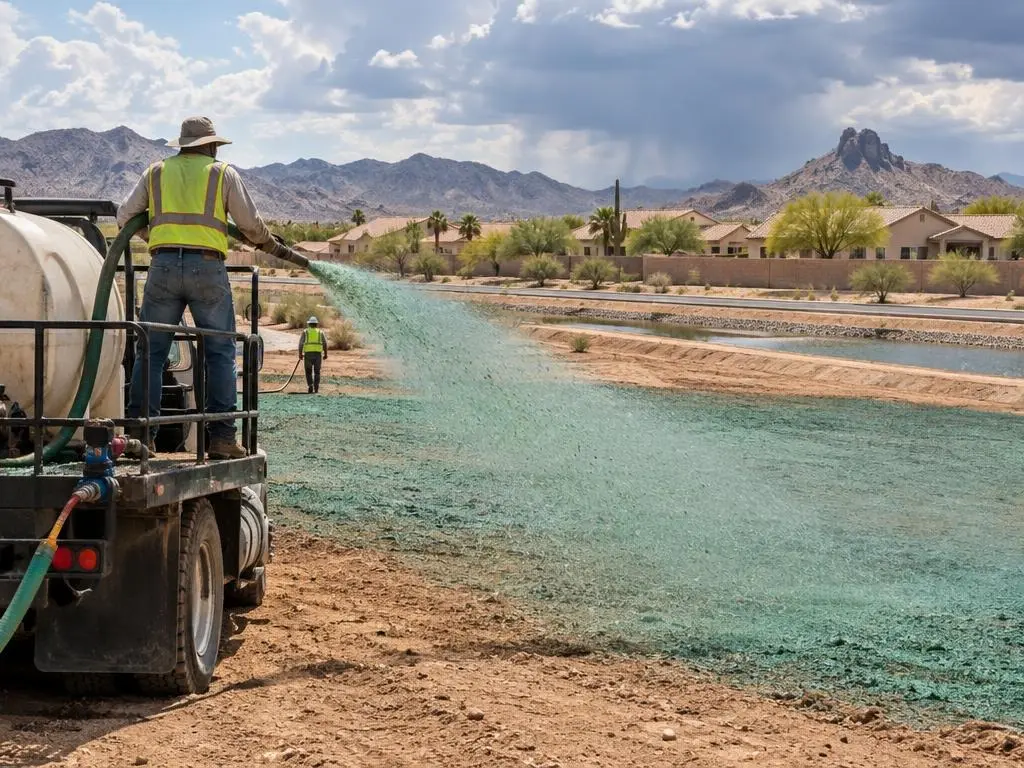
Builder & Commercial Hydroseeding Service Areas
- Hydroseeding in Phoenix, AZ
- Hydroseeding in Scottsdale, AZ
- Hydroseeding in Mesa, AZ
- Hydroseeding in Chandler, AZ
- Hydroseeding in Gilbert, AZ
- Hydroseeding in Tempe, AZ
- Hydroseeding in Glendale, AZ
- Hydroseeding in Peoria, AZ
- Hydroseeding in Surprise, AZ
- Hydroseeding in Goodyear, AZ
- Hydroseeding in Avondale, AZ
- Hydroseeding in Buckeye, AZ
- Hydroseeding in Queen Creek, AZ
- Hydroseeding in San Tan Valley, AZ
- Hydroseeding in Maricopa, AZ
- Hydroseeding in Apache Junction, AZ
- Hydroseeding in Fountain Hills, AZ
- Hydroseeding in Paradise Valley, AZ
- Hydroseeding in Cave Creek, AZ
- Hydroseeding in Carefree, AZ
- Hydroseeding in Anthem, AZ
- Hydroseeding in El Mirage, AZ
- Hydroseeding in Litchfield Park, AZ
Get a Builder & Commercial Hydroseeding Estimate
Send us your plans for a commercial hydroseeding bid.