
A 31-mile-long city
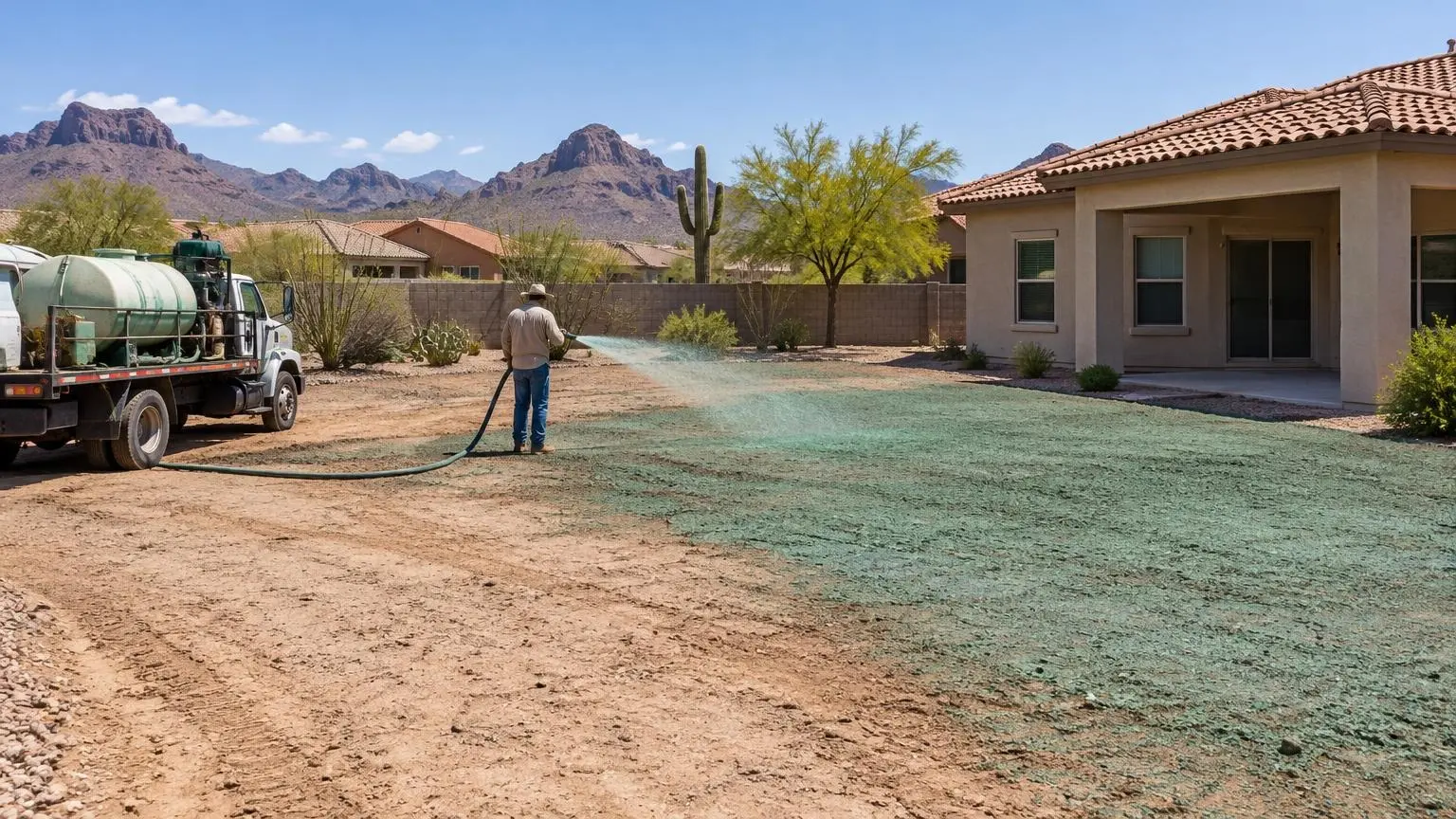
Hydroseeding in Scottsdale, AZ
Turf in the flood channel, native desert at the north end, and a lot of different ground in between.
- We look at your lot at no charge and quote it in writing
- Seed picked for the season: bermuda in summer, ryegrass in fall, natives for desert ground
- A written watering plan with every new seeding
Two very different Scottsdales
Hydroseeding in Scottsdale covers more variety than most people expect. The city runs about 31 miles from north to south and only 11.4 miles across at its widest point, climbing from 2,165 feet at the city's listed elevation to 4,890 feet at Butte Peak. South Scottsdale is older, flatter and lawn-friendly. North Scottsdale is newer, rockier and borders protected desert.
A flood channel built with grass
The Indian Bend Wash is a north-south floodplain that once split the city in two. After a major flood in 1972, Scottsdale built the Greenbelt flood-control project instead of the concrete channel voters had rejected in 1965. It was finished in 1984 and runs 12 miles through Vista del Camino, Eldorado, Indian School and Chaparral parks. Grass that is meant to carry floodwater has to be rooted deeply, and the same lesson applies to backyards that drain toward a wash: a hydroseed lawn needs its root zone established before the first big storm, not after.
Building near the preserve
Voters approved a sales tax in 1995 to fund the McDowell Sonoran Preserve, which is planned to cover about one-third of the city's land. North Scottsdale is where most new building happens, and many of those lots sit against undisturbed desert. On those jobs the goal is often not a lawn at all. It is revegetating disturbed ground around a new home with native grass seeding or wildflower seeding, plus hydromulch to stop the dust and rills.
Rain that comes in bursts
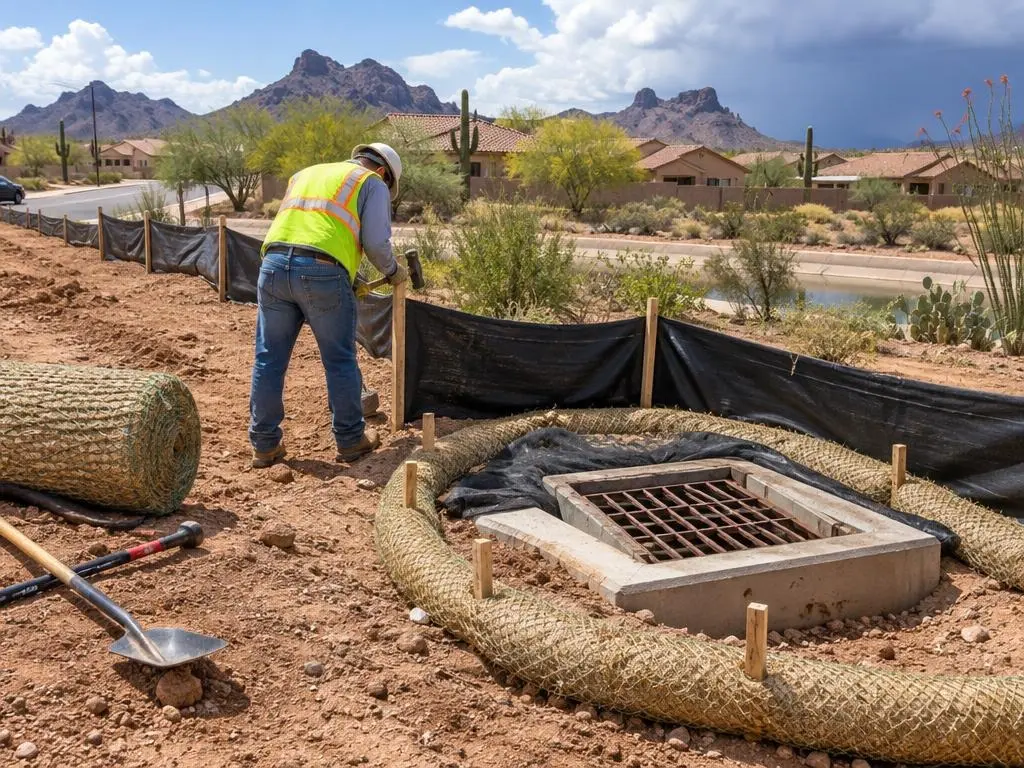
Scottsdale averages 8.73 inches of rain a year over only about 34 days, and July, August and September are the wettest summer months. That means long dry spells punctuated by heavy cells. Slope stabilization on graded pads, silt fence along the downhill edge and inlet protection at the street are what keep a north Scottsdale site from shedding sediment.
Typical Scottsdale needs
- Lawn renovation and overseeding on older south Scottsdale lots
- Native seeding on disturbed desert around new custom homes
- Bonded fiber matrix on cut slopes and driveway banks
- Grading crews for drainage swales, trenching and excavation
Get a free estimate or call (602) 497-4426.
Scottsdale terrain at a glance
- Greenbelt. The Indian Bend Wash Greenbelt runs 12 miles and was completed in 1984 after the 1972 flood.
- Preserve. The McDowell Sonoran Preserve covers some 30,500 acres and was established in 1994.
- High point. Butte Peak, at 4,890 feet, is the highest point in the city.
- Rain. Scottsdale averages 8.73 inches of precipitation a year, spread over about 33.7 days.
Scottsdale Questions
Can you seed native plants instead of grass on my north Scottsdale lot?
Yes. For disturbed desert around a new build we can spray a native grass and wildflower mix with hydromulch so it blends with the surrounding land.
My backyard drains toward the wash. What should I do before seeding?
Get the grade right first so water moves across the yard instead of cutting a channel. Then seed, and consider a blanket on the low side.
Is the greenbelt grass the same as what I would put in my yard?
The greenbelt uses turf to carry floodwater. A home lawn has a different job, but the idea is the same: good roots hold soil when water moves.
How do you handle dust on a north Scottsdale job site?
Hydromulch with tackifier binds the surface. On larger disturbed areas it is often the quickest way to stop blowing dust.
Free Estimates in Scottsdale, AZ
Ask about lawns, native seeding or slopes in Scottsdale.
Hydroseeding Near Scottsdale
- Hydroseeding in Phoenix, AZ
- Hydroseeding in Mesa, AZ
- Hydroseeding in Chandler, AZ
- Hydroseeding in Gilbert, AZ
- Hydroseeding in Tempe, AZ
- Hydroseeding in Glendale, AZ
- Hydroseeding in Peoria, AZ
- Hydroseeding in Surprise, AZ
- Hydroseeding in Goodyear, AZ
- Hydroseeding in Avondale, AZ
- Hydroseeding in Buckeye, AZ
- Hydroseeding in Queen Creek, AZ
- Hydroseeding in San Tan Valley, AZ
- Hydroseeding in Maricopa, AZ
- Hydroseeding in Apache Junction, AZ
- Hydroseeding in Fountain Hills, AZ
- Hydroseeding in Paradise Valley, AZ
- Hydroseeding in Cave Creek, AZ
- Hydroseeding in Carefree, AZ
- Hydroseeding in Anthem, AZ
- Hydroseeding in El Mirage, AZ
- Hydroseeding in Litchfield Park, AZ