Seed that lives on desert rain
Native Desert & Wildflower Seeding in Phoenix, AZ
Sonoran Desert native and wildflower mixes, sown in fall so winter rain does the work.
- We look at your lot at no charge and quote it in writing
- Seed picked for the season: bermuda in summer, ryegrass in fall, natives for desert ground
- A written watering plan with every new seeding
Revegetation That Does Not Need a Sprinkler
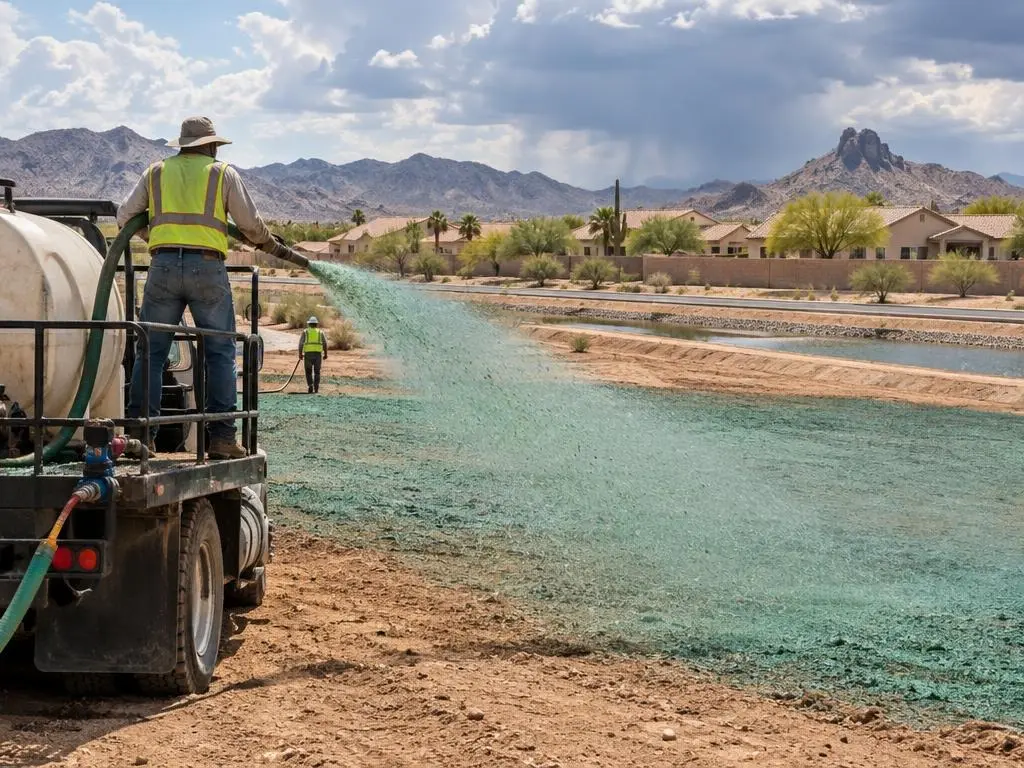
Native desert and wildflower seeding puts Sonoran Desert plants back on ground that will never be a lawn: subdivision open space, desert buffers, wash banks, cut slopes, utility corridors and the parts of a Phoenix yard you would rather not water. A lawn in Phoenix lives on irrigation. A native seed mix is chosen to live on the 7-odd inches of rain the Valley gets, once it has had help getting started. We spray native grass and wildflower seeding mixes with hydromulch for cover, or broadcast and rake on small pockets, depending on the site.
Why natives fit this valley
Phoenix sits in the Arizona Upland subdivision of the Sonoran Desert, described as having the most structurally diverse flora in the United States. Native perennials across the valley include palo verde, mesquite, ironwood and creosote bush, and the USDA's description of the Mohall soil series in Maricopa County lists mesquite, paloverde, creosotebush, bursage and cacti as native cover, with grasses and forbs appearing after spring rains. Those are the plants that grow here without help. A good native mix borrows from that list rather than from a generic meadow blend.
Timing: fall, not summer
Valley water-conservation guidance says the best time to plant desert wildflower seed is October through mid-December, because these annuals are drought evaders that lie dormant until fall and winter rains trigger them. Sky Harbor's records back that up: December through March each average around three-quarters of an inch to almost an inch of rain, while April through June are nearly dry. Seed sown in fall comes up with the winter rain, puts on green growth through January, and, in a good year, blooms in February and March. Summer monsoon seeding can work for some warm-season native grasses, but the heat and patchy storms make it riskier.
Choosing a seed mix
We steer away from mixes sold simply as wildflower or meadow, since many carry non-native species that either fail here or spread too well; African daisies are the example local conservation groups warn about. For Phoenix, a wildflower mix usually leans on species such as Mexican gold poppy, desert bluebell, arroyo lupine and owl's clover, often paired with perennials like desert marigold, firecracker penstemon and desert senna for color that lasts past one spring. Native grass seeding on slopes and open space is matched to the site's sun, slope and soil. We source seed from suppliers who list species and origin.
How we apply it
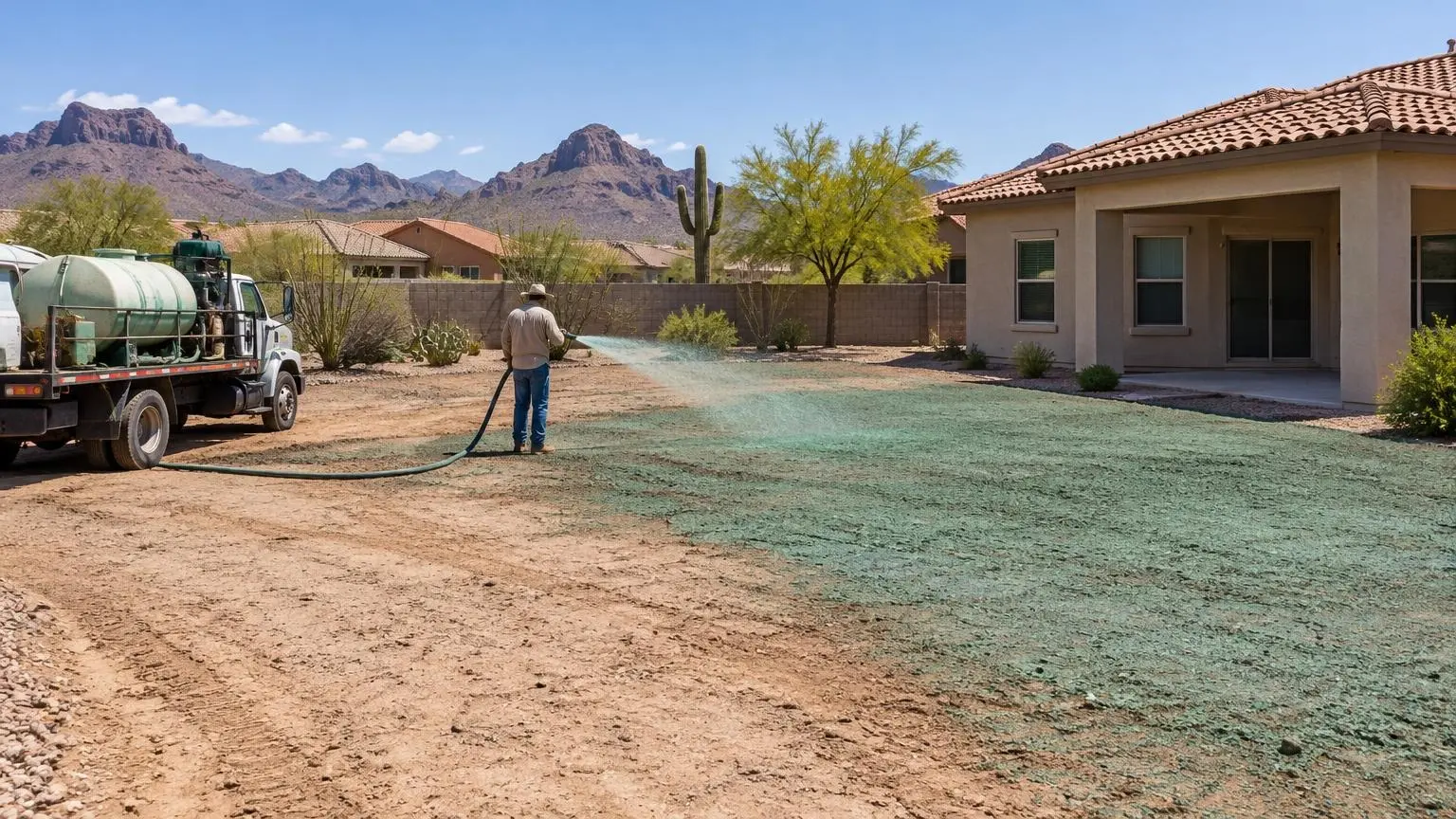
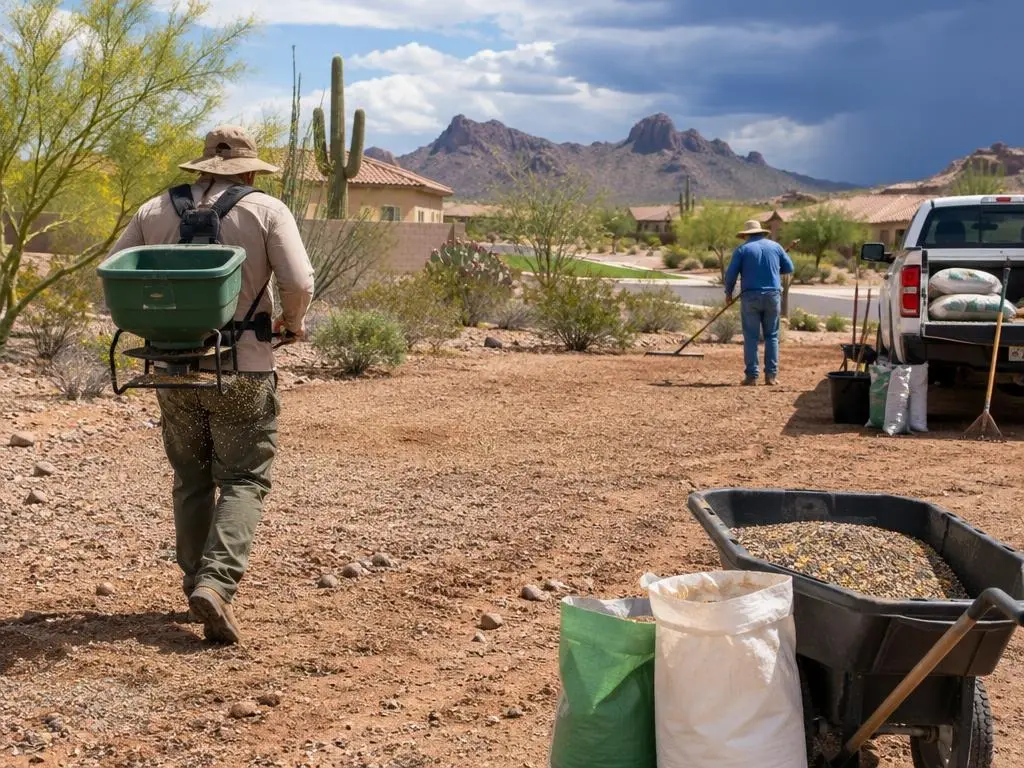
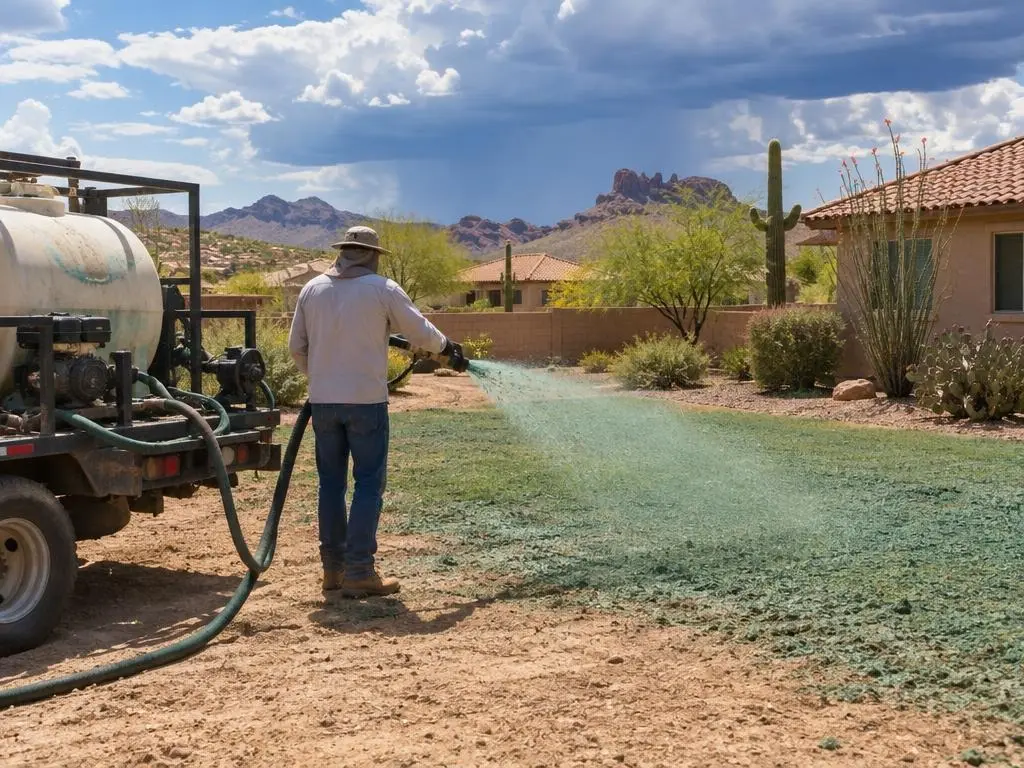
On larger areas and slopes we hydroseed the native mix with wood fiber mulch and tackifier. The mulch keeps seed in contact with the soil and in place in wind, and gives cover against erosion while the plants establish. On small yard pockets, near boulders or along paths, hand broadcasting and light raking works fine, and the guidance is to rake or press seed in, not bury it. For wash banks and steeper slopes, native seed can go under an erosion control blanket.
Water to get started
Native does not mean no water at first. If seasonal rain arrives, little extra is needed. Without rain, water-conservation guidance suggests watering two to three times a week until seedlings sprout, then backing off to about once every three to four weeks. Weeds that compete for that moisture should be pulled. After bloom, let the annuals drop seed so the stand renews itself the next winter.
Where native seeding fits on a property
On a residential lot, native seed usually goes where grass would be wasted: the strip between the back wall and a wash, a slope behind the pool, the far side of a big lot, or a front yard being converted away from turf. On subdivision and commercial work it is the standard finish for open space, desert buffers, basin banks that will not be irrigated, and disturbed ground along new roads and utility lines. Native seeding also pairs well with a small bermuda lawn: the lawn takes the water, the rest of the yard lives on rain. Wildflowers want full sun, at least six hours a day, and look most natural in low spots, along paths and around boulders rather than as one solid block.
Weeds are the main competition
In the first season, the biggest threat to a native stand is not heat but weeds that come up with the same winter rain. We pull or spot-treat the worst of them before sowing and show you what the young native seedlings look like, so you know what to keep.
What to expect
Native and wildflower stands vary year to year with rainfall and temperature, and birds and insects take some seed. A dry winter means a thin bloom; a wet one can be spectacular. The goal is ground that stays covered and stable with little or no irrigation, not a uniform green carpet.
Native Seeding Work
Desert-adapted seed for ground that will not be irrigated long-term.
Wildflower seeding
Sonoran annual and perennial wildflower mixes sown in fall.
Native grass seeding
Native grass mixes on open space and slopes.
Desert revegetation
Disturbed desert and utility corridors reseeded with hydromulch.
Wash bank seeding
Native seed with blankets or mulch on banks near washes.
Low-water yard pockets
Hand-sown wildflower areas around boulders and paths.
Typical Native Seeding Costs
| Work | Typical range |
|---|---|
| Hydroseeding application, per sq ft (HomeGuide) | $0.12 to $0.35 |
| Hydroseeding application, per acre (Fixr) | $2,000 to $4,000 |
| Hand-broadcast erosion seeding, per acre (a transportation agency 2025 rate list) | $372 |
| Wood-fiber hydromulch, sprayed, each 1,000 sq ft (same list) | $98 |
| Native seed mix | Set once we measure and pick species |
No current published price for contractor-installed native or wildflower seeding was found. Native seed varies widely by species, so the mix is priced per site. National numbers for context; we put a firm number in writing after the visit.
How Native Seeding Works
1. Look at the site
Sun, slope, soil, drainage and whether any irrigation is possible.
2. Pick the mix
Species chosen for the site, with origin listed.
3. Prep lightly
Rough the surface; remove weeds that will compete.
4. Sow in fall
Hydroseeded with mulch or hand-sown and raked in, October to mid-December.
5. Water until sprout
Only if rain does not come, then taper off.
Why Choose Us for Native Desert & Wildflower Seeding
Desert species, not meadow blends
Mixes built from Sonoran natives, without invasive filler.
Sown on the rain calendar
Fall sowing to catch winter storms.
Erosion cover built in
Mulch or blankets hold the slope while plants establish.
Native Desert & Wildflower Seeding Questions
When should wildflower seed be sown in Phoenix?
October through mid-December. The seed lies dormant until fall and winter rains, then grows through January and blooms in February and March.
Do native seed areas need irrigation?
Only to get started if rain does not come: two to three times a week until sprouting, then about once every three to four weeks. Established stands rely on rainfall.
Can native seed control erosion on a slope?
Over time, yes, as roots take hold. Until then, hydromulch or a blanket provides the cover. We usually combine them.
Why not use a cheap wildflower mix?
Many generic mixes contain non-native species that fail in desert heat or spread aggressively. A Sonoran native mix costs more but suits the site.
Native Desert & Wildflower Seeding Service Areas
- Hydroseeding in Phoenix, AZ
- Hydroseeding in Scottsdale, AZ
- Hydroseeding in Mesa, AZ
- Hydroseeding in Chandler, AZ
- Hydroseeding in Gilbert, AZ
- Hydroseeding in Tempe, AZ
- Hydroseeding in Glendale, AZ
- Hydroseeding in Peoria, AZ
- Hydroseeding in Surprise, AZ
- Hydroseeding in Goodyear, AZ
- Hydroseeding in Avondale, AZ
- Hydroseeding in Buckeye, AZ
- Hydroseeding in Queen Creek, AZ
- Hydroseeding in San Tan Valley, AZ
- Hydroseeding in Maricopa, AZ
- Hydroseeding in Apache Junction, AZ
- Hydroseeding in Fountain Hills, AZ
- Hydroseeding in Paradise Valley, AZ
- Hydroseeding in Cave Creek, AZ
- Hydroseeding in Carefree, AZ
- Hydroseeding in Anthem, AZ
- Hydroseeding in El Mirage, AZ
- Hydroseeding in Litchfield Park, AZ
Get a Native Desert & Wildflower Seeding Estimate
Plan your fall native seeding with a free site visit.